
Mangroves are widely recognized for their ability to protect shorelines from wave energy, improve water quality, and to provide vital habitat for fish and bird species. Despite their significance, mangrove forests globally are under increasing pressure from climate change, rising sea levels and ongoing coastal development. Once lost or fragmented, these forests pose a significant challenge to restore successfully, particularly in developed areas. The idea of ‘floating mangroves’ is being explored by researchers in Project Halo as a nature-based solution to introduce benefits of mangrove stands into urbanised areas. The concept builds on the success of previous proof-of-concept trials, which have shown mangroves to be capable of growing on floating structures via irrigation from seawater below.
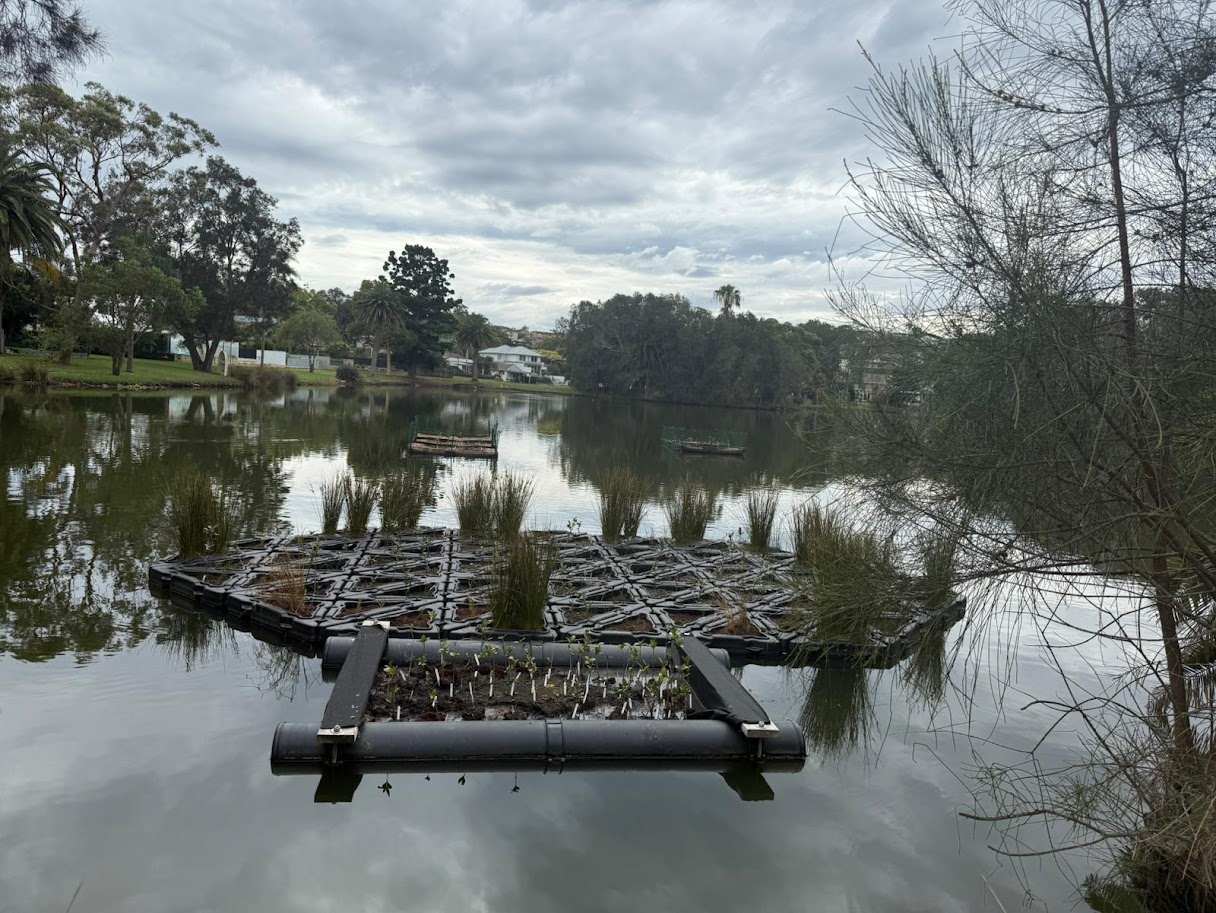

The Project Halo team has selected three designs which integrate mangroves into floating modules for trial in Manly Lagoon, Sydney. Over the last six months, the team has been working to develop and install the modules which has now been completed, with over 200 mangrove seedlings growing successfully. Researchers are now monitoring the growth of the seedlings and the environmental conditions of the pontoons. These trials are being used to inform critical knowledge gaps around floating mangrove ecosystems, with researchers aiming to determine the optimal design and construction to support mangrove growth. The trial is planned to be extended to an additional site in Fiji in the coming months, using pontoons designed and built by Project Halo researchers.