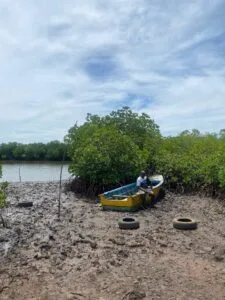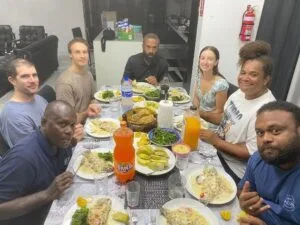
In March 2026, I undertook my first fieldwork for PhD data collection at Raviravi, marking an important milestone in my research journey.
Our team departed Suva on Sunday 15th March, travelling to Lautoka where we were based for the duration of the fieldwork. From there, we commuted daily to Raviravi, with field activities taking place from 16-19th March 2026.
We worked across two teams. The mangrove team consisted of Tom, Manoa, Emma, and myself, while Brad and Akuila focused on elevation surveys, and retrieving and installing loggers. Dr. Dansie and Salote provided valuable support, moving between the two groups throughout the week.
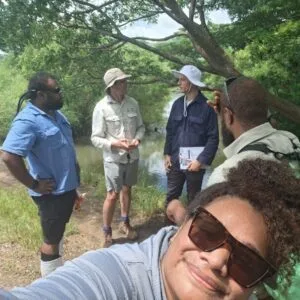
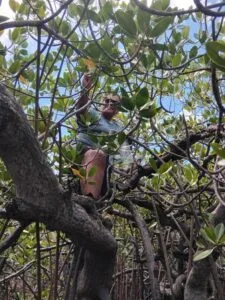
This fieldwork forms part of my PhD research, which explores how mangrove ecosystem attributes are linked to ecosystem services. The primary aim of this trip was to collect baseline data from both natural mangrove systems and degraded farmland sites, marking the first of several planned field visits.
Each day, our team worked within 10m x 10m plots to collect detailed measurements. This included tree height and diameter at breast height (DBH) using both manual tools and scanning technology. We also measured saplings and seedlings, and collected soil samples to assess nutrient content across sites. To better understand mangrove root systems, we measured lateral root lengths in three direction, towards the sea, towards the land, and sideways. We also counted prop roots attached to the main trunk and recorded the number of hanging roots. Leaf samples were collected from trees within each quadrant to complement the dataset.
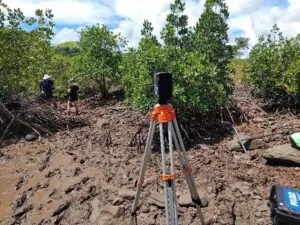
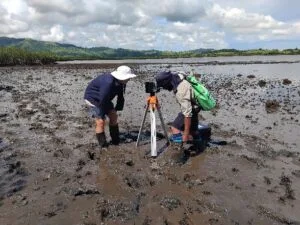
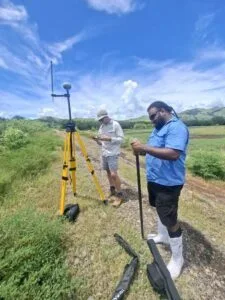
Working in the mangrove forest was physically demanding, but the enthusiasm and teamwork carried us through. The muddy terrain, dense vegetation, and tidal conditions tested our endurance, yet the sense of purpose and collaboration made the experience deeply rewarding.
This first fieldwork was not only about data collection, it was about learning to navigate challenges, building resilience, and strengthening bonds within the team. I am grateful to everyone who contributed to the success of this four-day trip to Raviravi. It was exciting, fulfilling, and a milestone in my PhD journey.