
My Vanua Levu Fieldwork Journey
My PhD is investigating how sustainable mangrove practices can strengthen coastal resilience by integrating mangrove ecosystem services, community leadership, and cultural practices. The research aims to develop an ecosystem‑valuation framework, identify the social, environmental, and economic benefits of mangroves for coastal communities, including sugarcane farmers and examine how local incentives, such as income from mangrove‑based activities, fish coastal protection, and cultural values, together with community leadership and cultural connections, support long‑term mangrove management in Fiji.
I would like to acknowledge my team of supervisors, including Associate Professor Antoine de Ramon N’Yeurt (Principal Supervisor from USP), Dr. Isoa Korovulavula (USP), Dr. Laura Montano Luna, Associate Professor Andrew Dansie, and Professor William Glamore from UNSW, for their guidance in preparation for the fieldwork and for being available virtually to support me throughout. Special thanks also go to Dr. Rajesh Prasad (USP), who accompanied me in the initial days, introduced me to the communities, and helped me settle in Vanua Levu. I am deeply grateful to the communities for generously sharing their time for this research, to the Provincial Administrator Mr. Revoni Rakasalu, the Provincial Council Office, and the Roko Tui Macuata for their support and cooperation, and to my homestay hosts for their hospitality. I am also grateful to the Project Halo coordinator, Miss Anushka Maharaj, for going the extra mile to ensure all my logistical and financial arrangements were in place for the research and my Research Assistant, Mr. Epeli Waqa, whose hard work and dedication were essential to the success of this fieldwork. Most importantly, Vinaka vakalevu to Swire Shipping, my sponsor, for providing the generous support that made this fieldwork possible.
Those Intense First Days (February 14th-18th)
On February 14th, 2026, while the world was celebrating Valentines Day, I frantically checked my packing for two months of PhD fieldwork in Vanua Levu, a region I barely knew. This was the big start: collecting on-ground data under Project Halo for my PhD research. The planning had kicked off a month earlier. My former PaCE-SD student Babitu connected me with the Senior Fisheries Officer, who introduced me to Provincial Administrator Mr. Revoni Rakasalu.
Dr. Rajesh Prasad, the Aquaculture expert from the Centre for Sustainable Futures, who is also a Labasa local, assisted in the initial identification of potential sites and generously offered to guide our team. Mr. Revoni helped us identify several more sites and arranged homestays.
I packed my essentials: tablets loaded with Qualtrics surveys, voice recorders for interviews, and stacks of printed questionnaires and focus group discussion guidelines in English, Vosa Vakaviti, and Fiji Hindi. Joining me were Research Assistant Mr. Epeli Waqa and Dr. Rajesh Prasad, whose local know-how proved invaluable.
With sponsor funds from Project Halo and Swire Shipping invested in my research, the pressure was on me to ensure data collection ran smoothly and delivered the required community insights.
Arrival and First Hurdles: February 15th
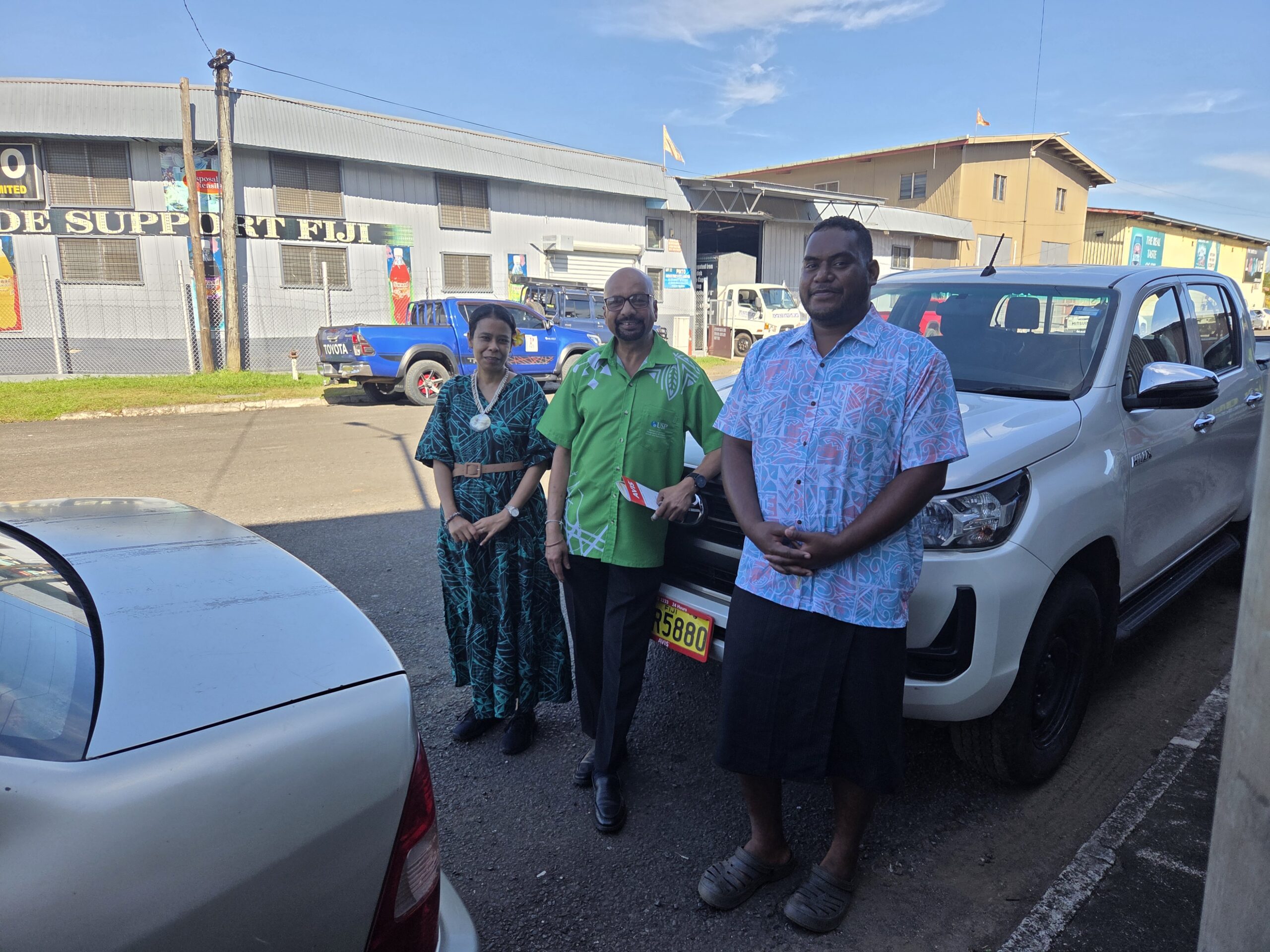
We touched down at Waiqele Airport in Labasa at exactly 12:55 PM, right on time, since maintenance closed it from February 16th. Hunger hit hard after the flight, but as we grabbed our bags, I noticed one wheel on my luggage was missing, likely from rough handling. Labasa enveloped us in its hot and humid blanket.
We dropped our bags at the budget Airbnb in Nasekula, a simple spot that served as our base for three nights. No time to waste, we hopped back in the same taxi to Damodar City Labasa for a hearty lunch of roti and curry. Feeling refueled, we stocked up on groceries: rice, veggies, tins, and basics for breakfasts and dinners.
Preliminary Site Visit: February 16th
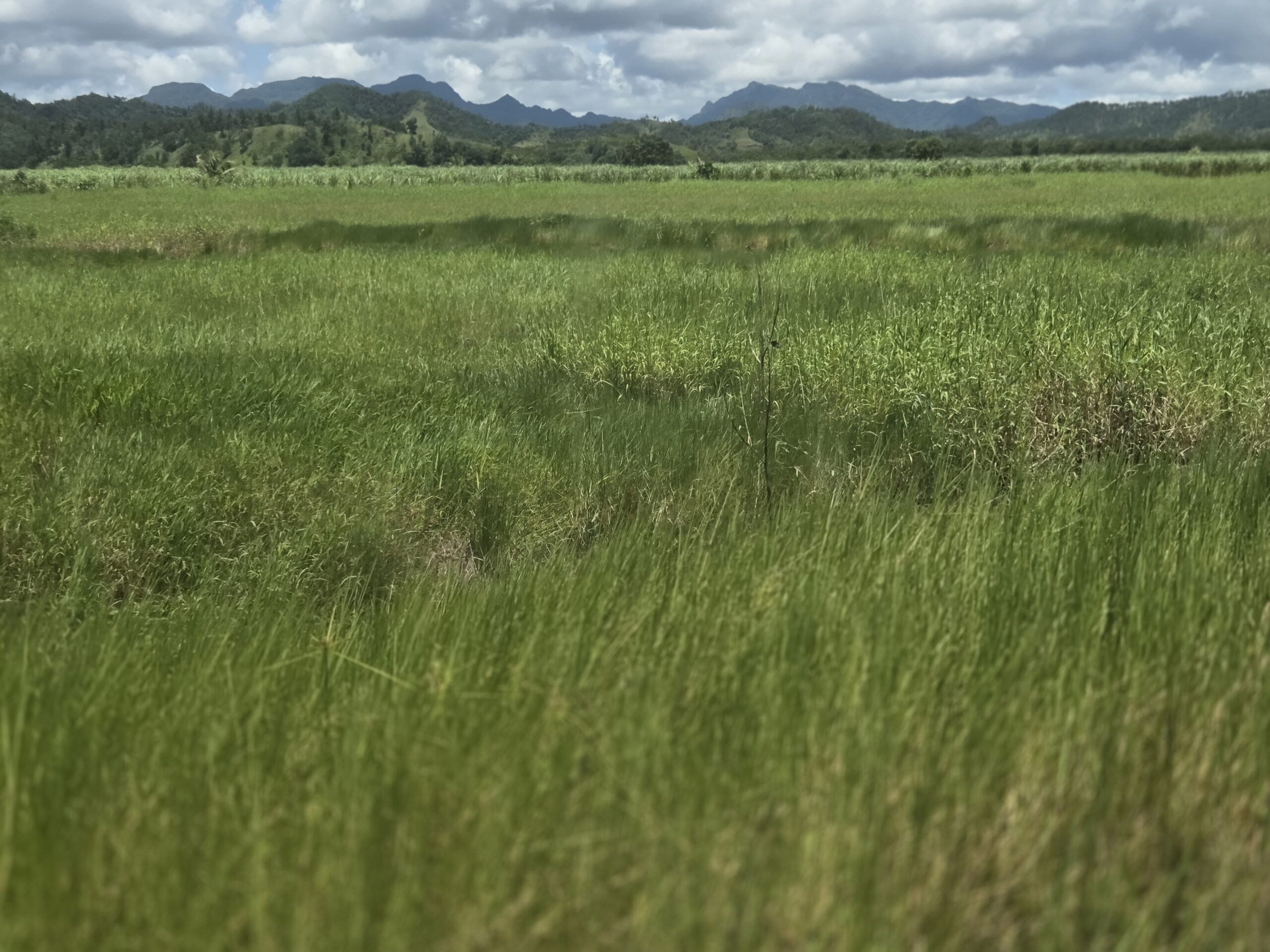
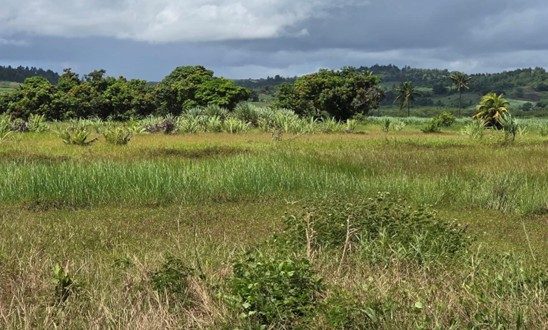
We rolled out early at 7:45 AM in the 4×4, tackling the bumpy Wainikoro Road. Endless sugarcane fields swayed green under the sun, and pockets of wild nature thrilled me. I kept wondering aloud, “Where exactly are we headed?” After nearly two hours of jolts and dust, we arrived at our first destination: Wainikoro Boca, the prospective homestay for Mr. Waqa and me. We walked the grounds, noting its proximity to mangroves and easy village access.
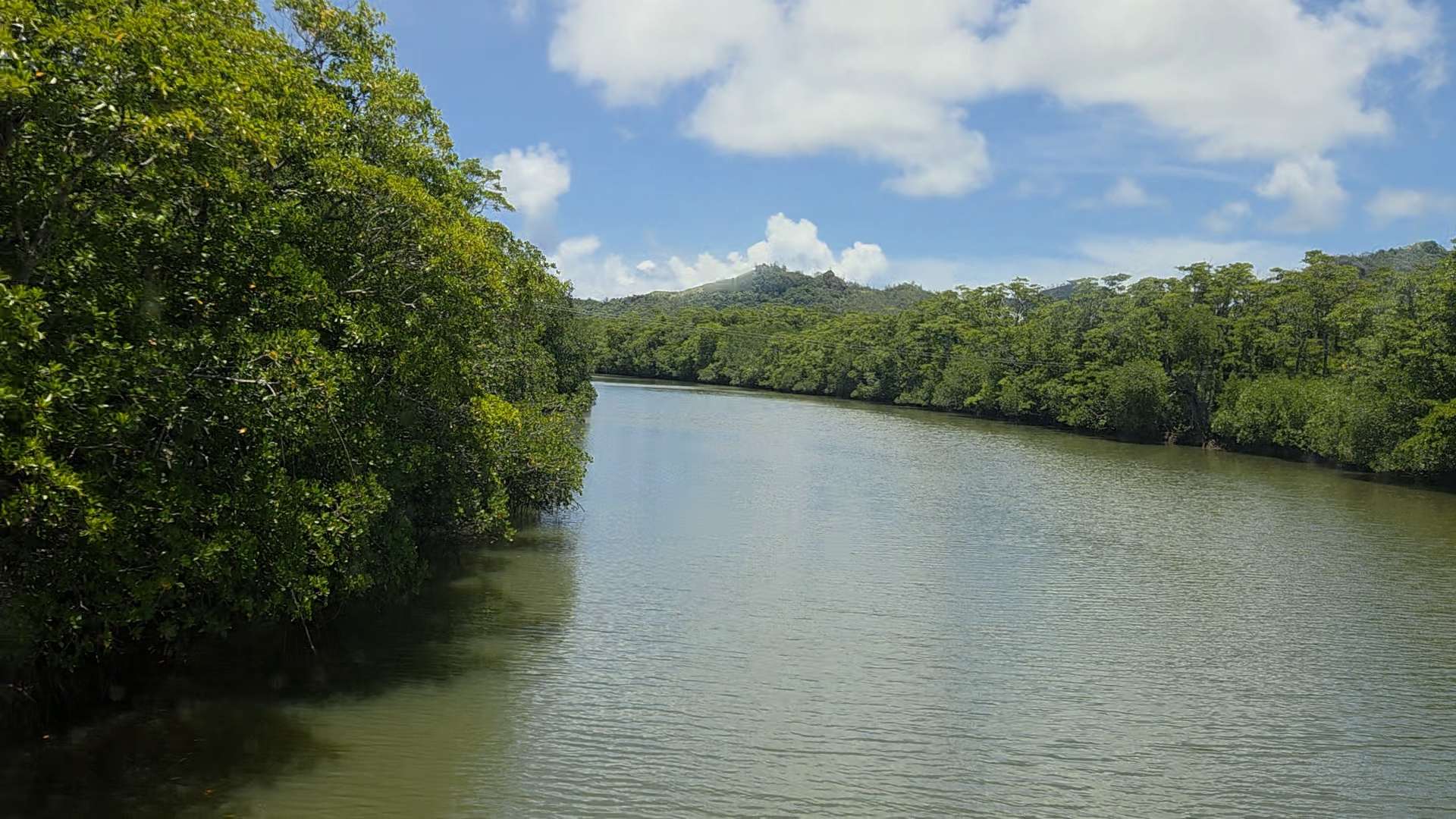
Next stop: Mouta village, a tiny settlement nestled in sheltered mangroves. The peace hit me, the gentle lap of water, bird calls, shady trees. It felt like home already. True to Vanua Levu’s “friendly north” reputation, the people greeted us with big smiles and easy chatter. We presented sevusevu with yaqona, explained our Project Halo research, and arranged dates for fieldwork. “Call us first to confirm,” the elders said warmly. On the drive back, we passed Vunivutu and Wavuwavu villages, earmarked for February 18th.
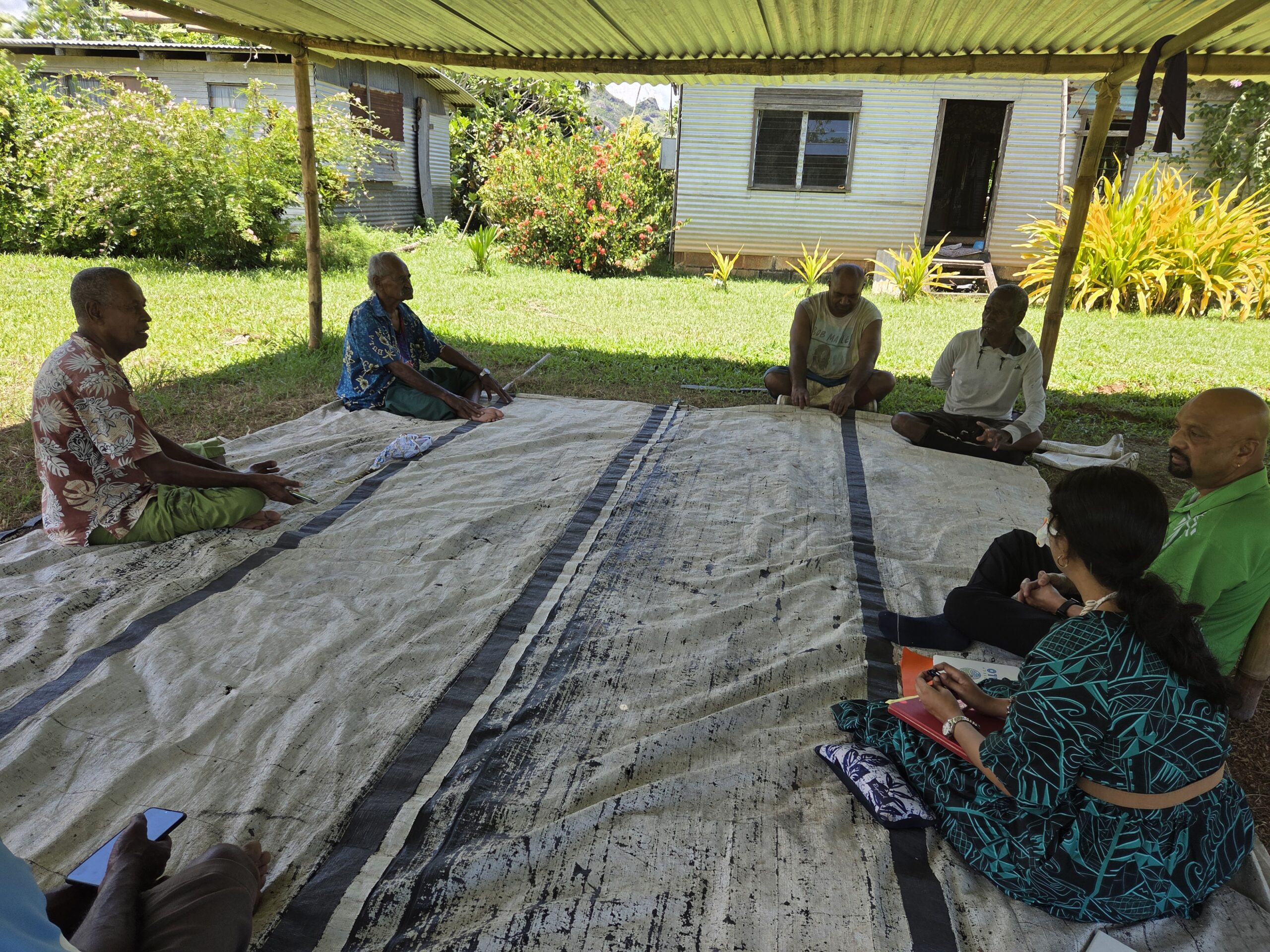
We returned to the Airbnb exhausted, feet aching from the heat, but deeply satisfied. One nagging worry lingered: my Qualtrics was still on free trial, without full UNSW access for unlimited surveys. Thankfully, Dansie and Laura back at UNSW worked tirelessly to resolve it, I felt confident it would come through.
Stakeholder Power-Up: February 17th
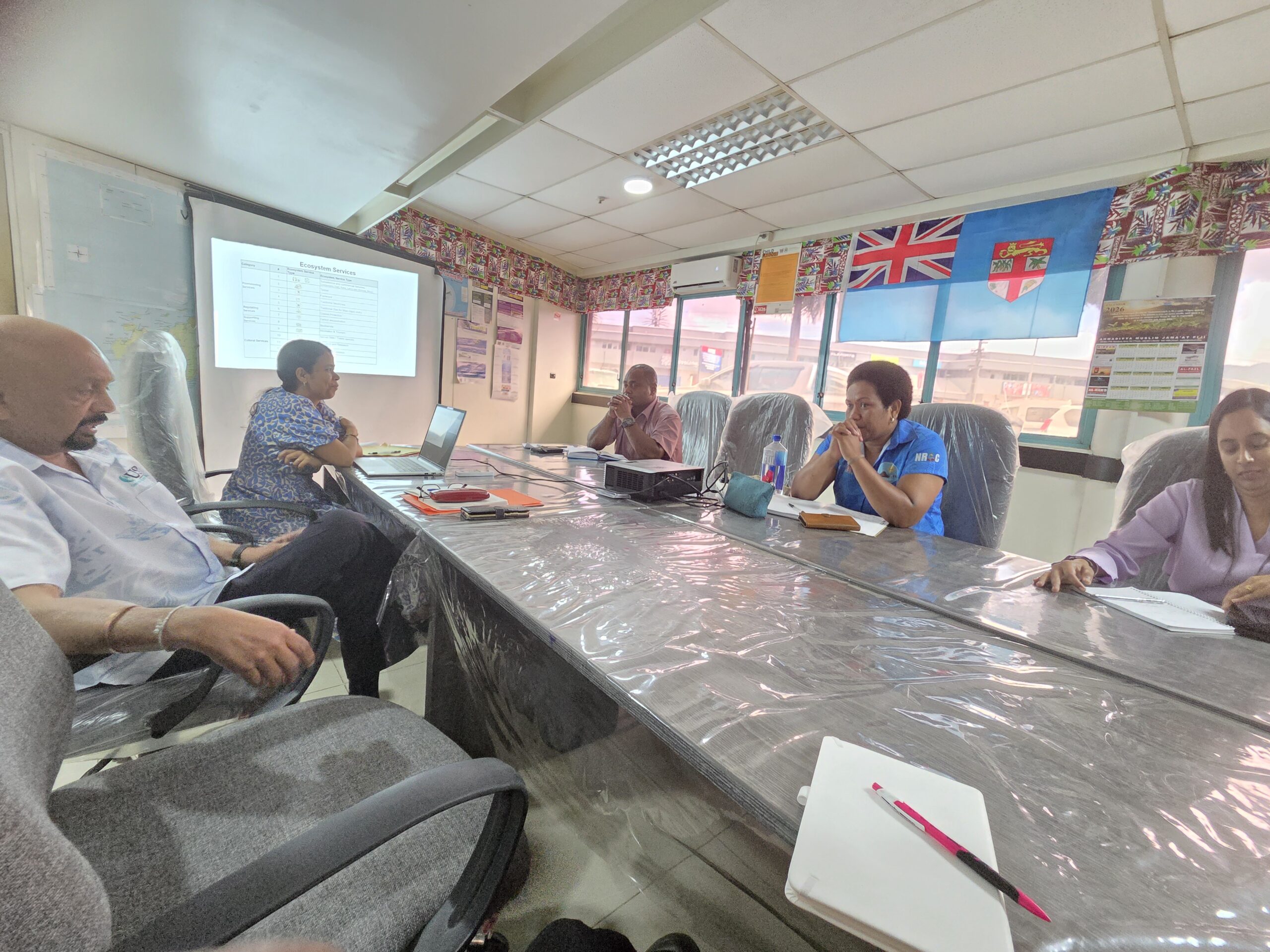
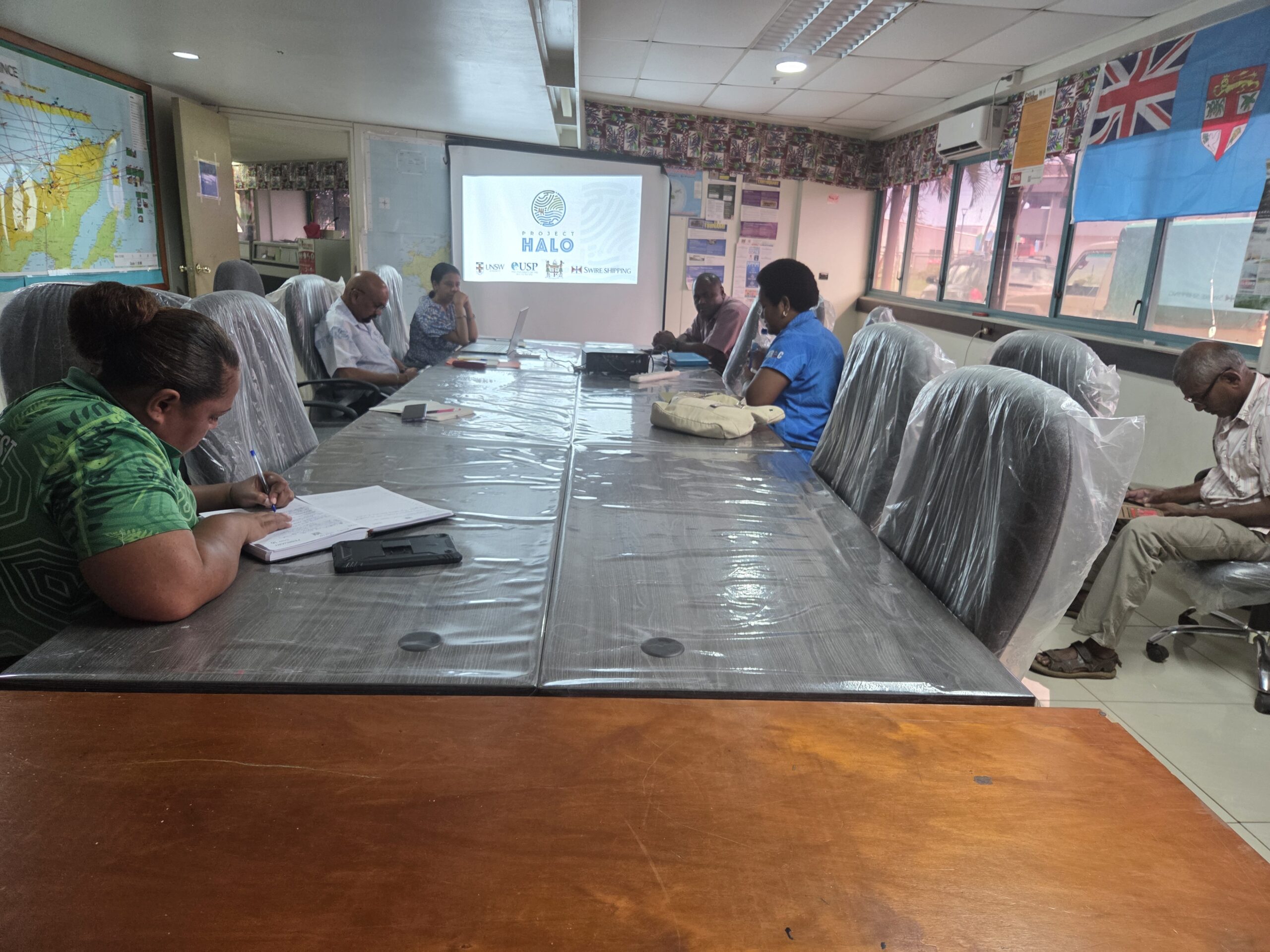
Tuesday brought a packed schedule. Mr. Revoni had organized a key stakeholder consultation at the Macuata House Conference room. Representatives showed up strong: Provincial Council, Ministry of Environment, Ministry of Forestry, the Wailevu Tiri Advisory Councillor, and a Wavuwavu delegate. I presented my research, focusing on mangrove ecosystem services and its values, community resilience, and climate adaptation. Discussions flowed constructively; they raised practical queries about methods, timelines, and benefits. We addressed everyone, building trust.
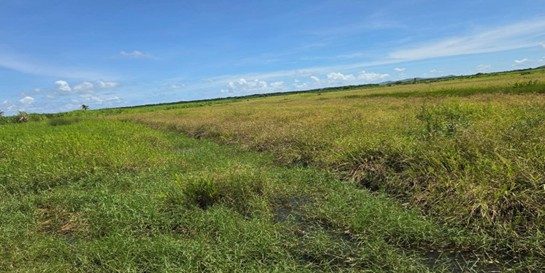
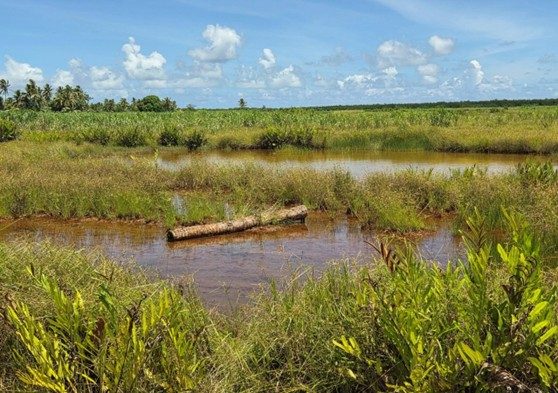
Energised, we drove to Wailevu Tiri site. Saltwater intrusion was stark, brackish patches scarring the sugarcane fields, a clear climate warning. We wrapped with final shopping in Labasa town: extra batteries, water, focus group discussion refreshments, yaqona and groceries for the homestay. Wavuwavu was over an hour away from Labasa town, so we double-checked our list. Back at the Airbnb for our last night, we repacked and rested.
Settling into Homestay Life: February 18th
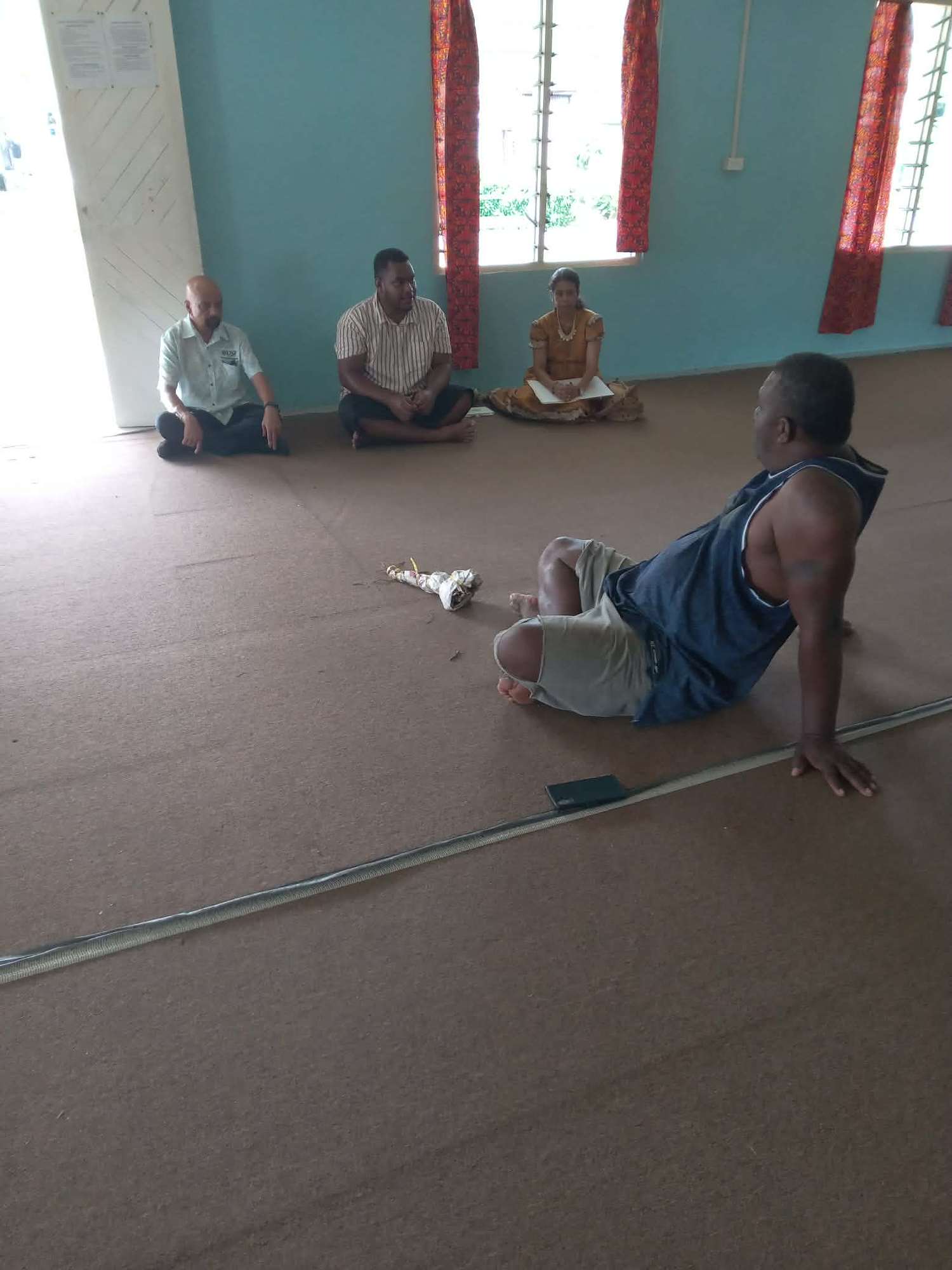
Dr. Prasad drove us to Wavuwavu early, our first real homestay, tucked in Vanua Levu’s interior amid fresh air and rolling sugarcane fields. We fell in love: simple, airy, with a welcoming family. We unloaded luggage and groceries, then headed straight to Vunivutu village. Sevusevu was presented to the Turaga ni Koro and provided an overview of our household surveys and focus groups. He granted full permission: “The village is open to you.” They were genuinely happy to host, and he promised to assist in the identification of potential households for household surveys and also arrange the FGD participants.
Returning to the homestay felt like coming home; a warm, home-cooked dinner of fresh fish, vegetarian fried rice, and greens waited. Over the meal, Mr. Waqa and I reviewed plans. I did final checks on the household survey script, set to begin on February 19th.
Those four days were a whirlwind of heat, bumps, and breakthroughs. Vanua Levu’s spirit and our team’s grit made it magic. Next up: the surveys!
Vunivutu Fieldwork: Commencement of Household Surveys (February 19th)
After those whirlwind setup days, February 19th marked our first real data dive. We began household surveys in Vunivutu village, ready to capture stories on mangrove ecosystem services under Project Halo. With sponsor funds invested, I stayed laser-focused on smooth collection.
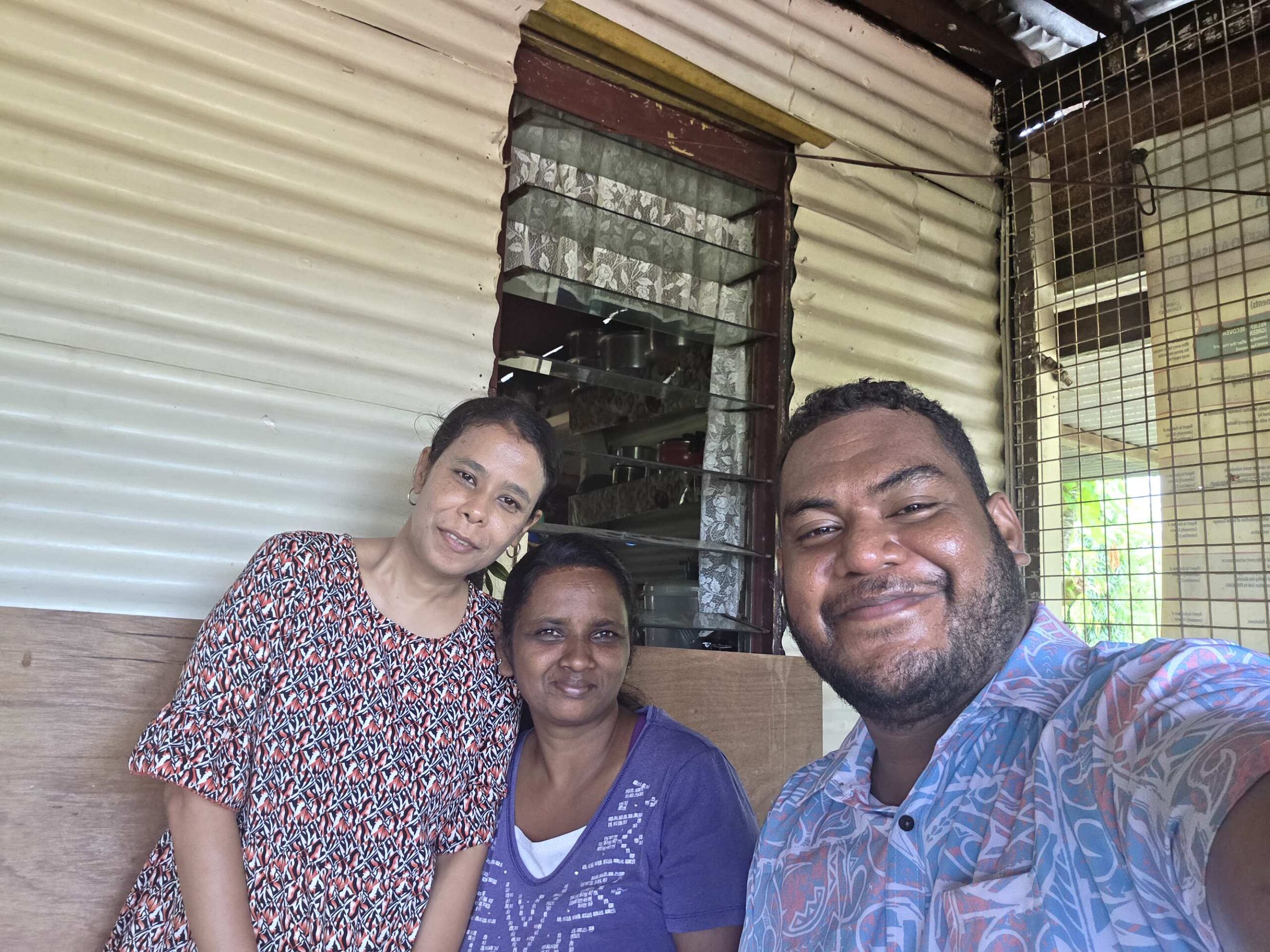
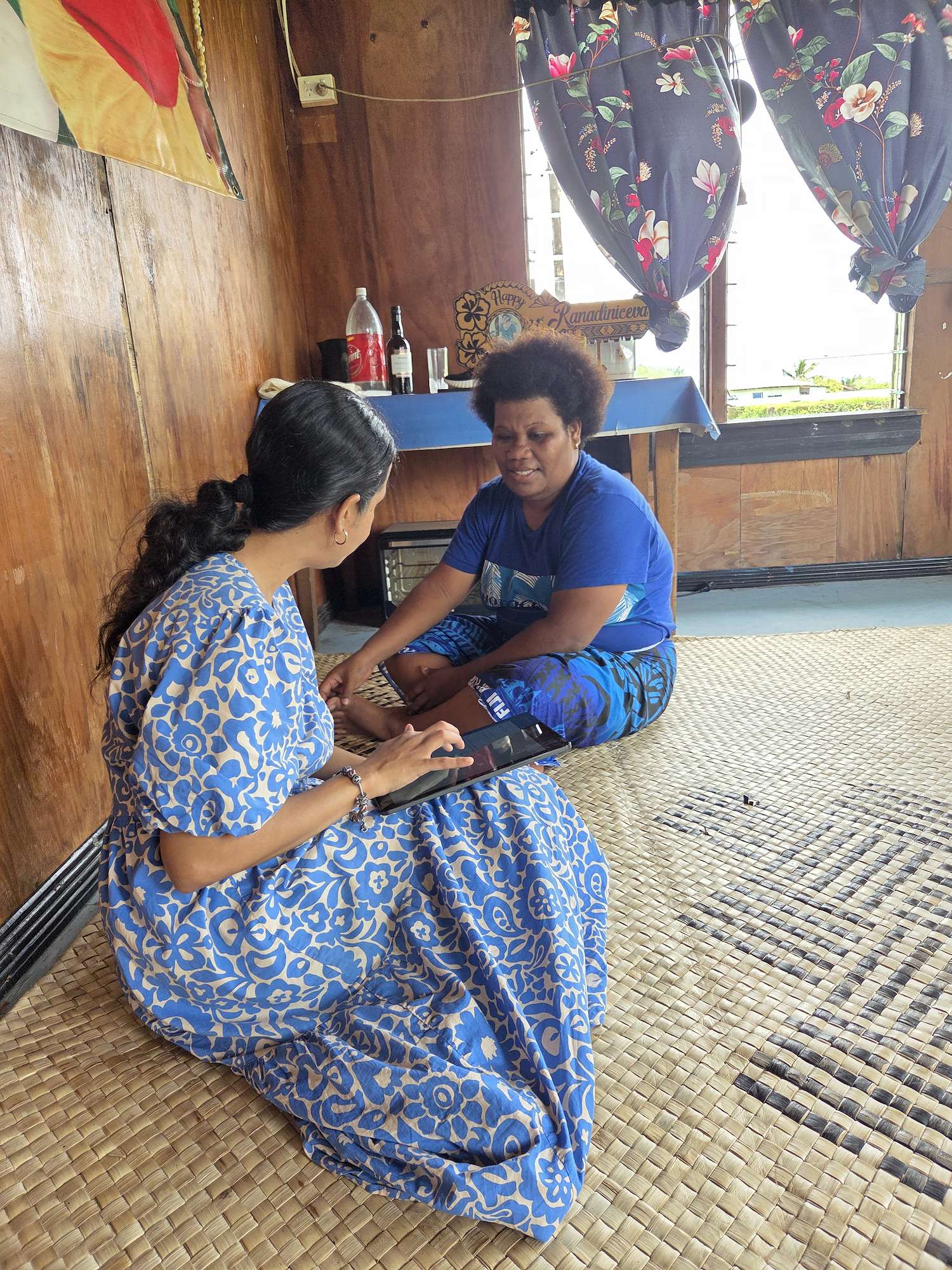
The Turaga ni Koro had instructed us to arrive by 10 AM, giving households time for morning chores. Epeli and I pulled up sharp at 10 AM in our hired vehicle. We were guided straight to the chief’s house, our first respondent. Out of respect, we explained the research purpose in detail again since he was not busy on the day when we presented the “Sevusevu”. Then we started the survey.
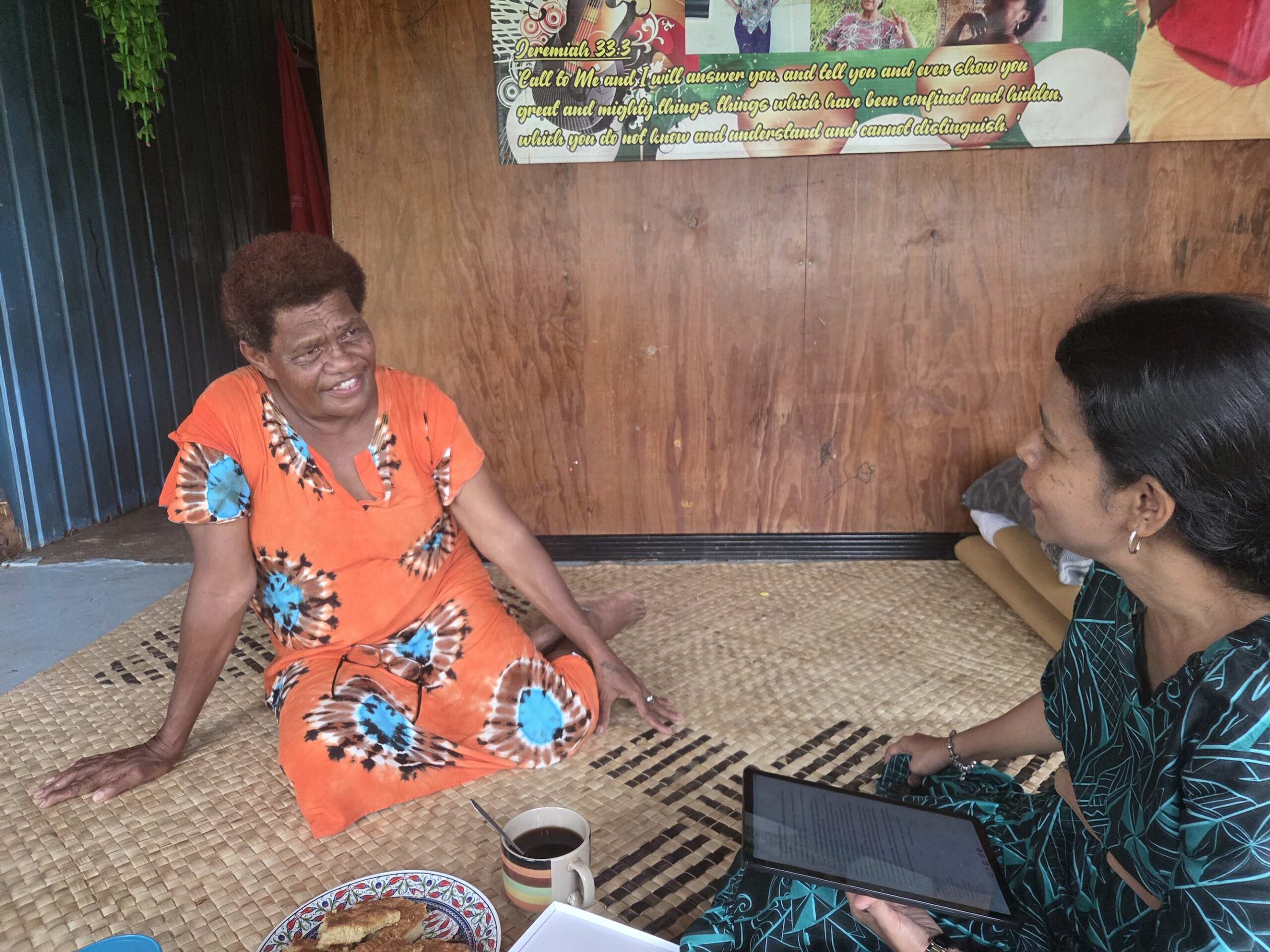
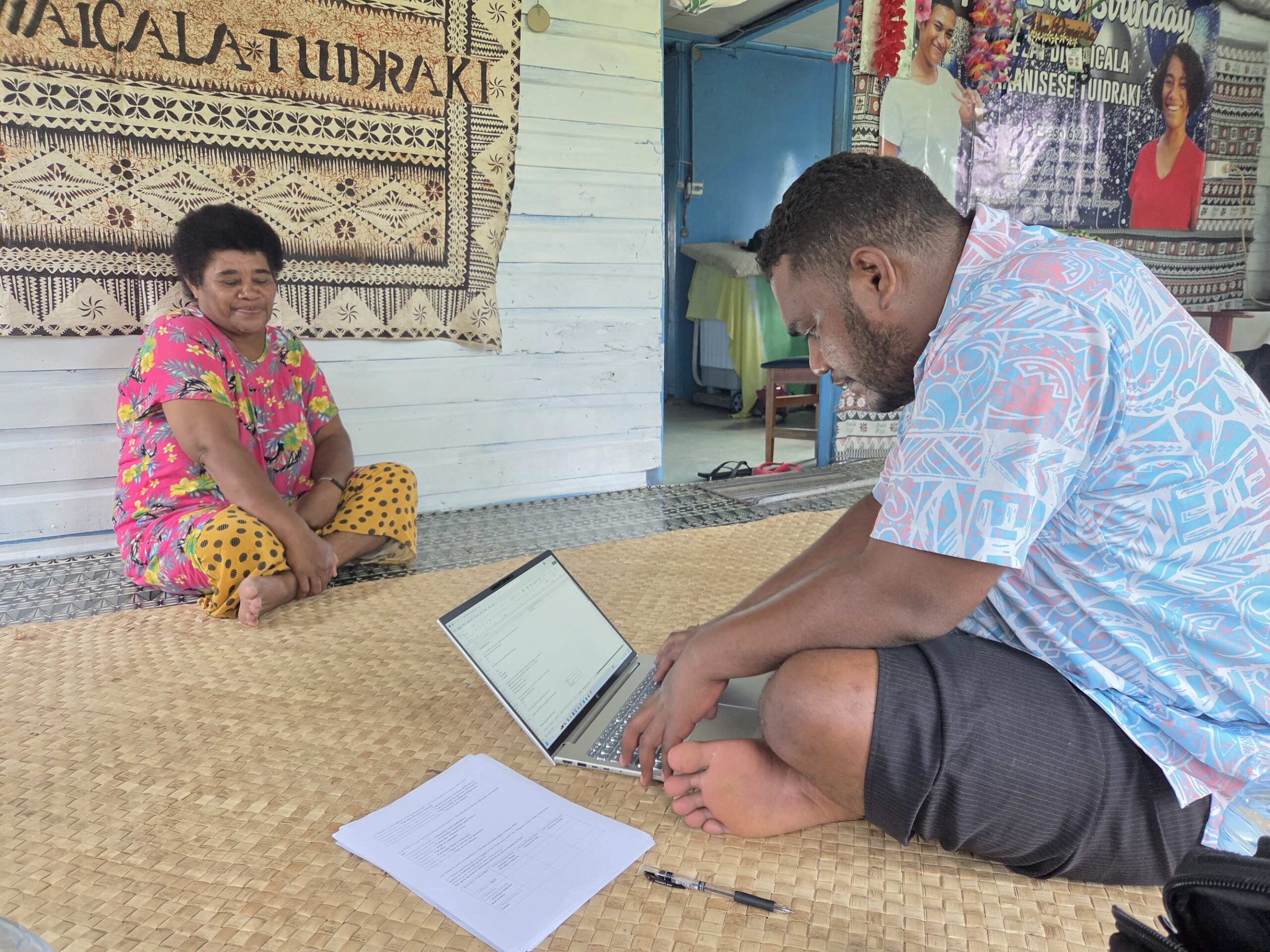
Thank God, the internet worked there! We filled out the Qualtrics online questionnaire directly. Being the first one, it took us over an hour, covering livelihoods, mangrove values, and climate impacts. When we finished, they served a warm lunch: fried cassava, fresh fish, custard pie, and tea. Yummy, the food hit just right, tummies happy at last.
Past midday, we headed to the second household. Pace felt slow, but it was day one. It was difficult to find houses with an internet connection. This slowed our work. We fell short of our six-household target, with only five completed. Disappointed, we drove back to the Wavuwavu homestay. Tiring, frustrating, but at least the information was captured.
Heat chased us all day, unbearable, thick, relentless. The homestay fan blew hot air, no relief. That evening, visitors dropped by our host family, super-friendly locals. We chatted, laughed, and shared stories. It lifted spirits. We hadn’t hit the target, but we crashed satisfied: work had started smoothly. We adjusted plans. Informed the Turaga ni Koro we’d do afternoon focus group discussions with elders and leaders on Friday, 20th April. Meanwhile, we’d shift household surveys to Wavuwavu because it had reliable internet, unlike Vunivutu. Why? No full UNSW Qualtrics access yet meant no offline mode. We hoped for a resolution by Monday.
Day one taught grit: tech glitches, heat battles, but real data flowing. More village tales coming soon!
Household Surveys in Wavuwavu and FGD in Vunivutu (February 20th)
February 20th ramped up the momentum. We started early at 8:30 AM for household surveys in Wavuwavu, chasing our target after yesterday’s shortfalls. Internet reliability was key; there was no full Qualtrics offline yet.
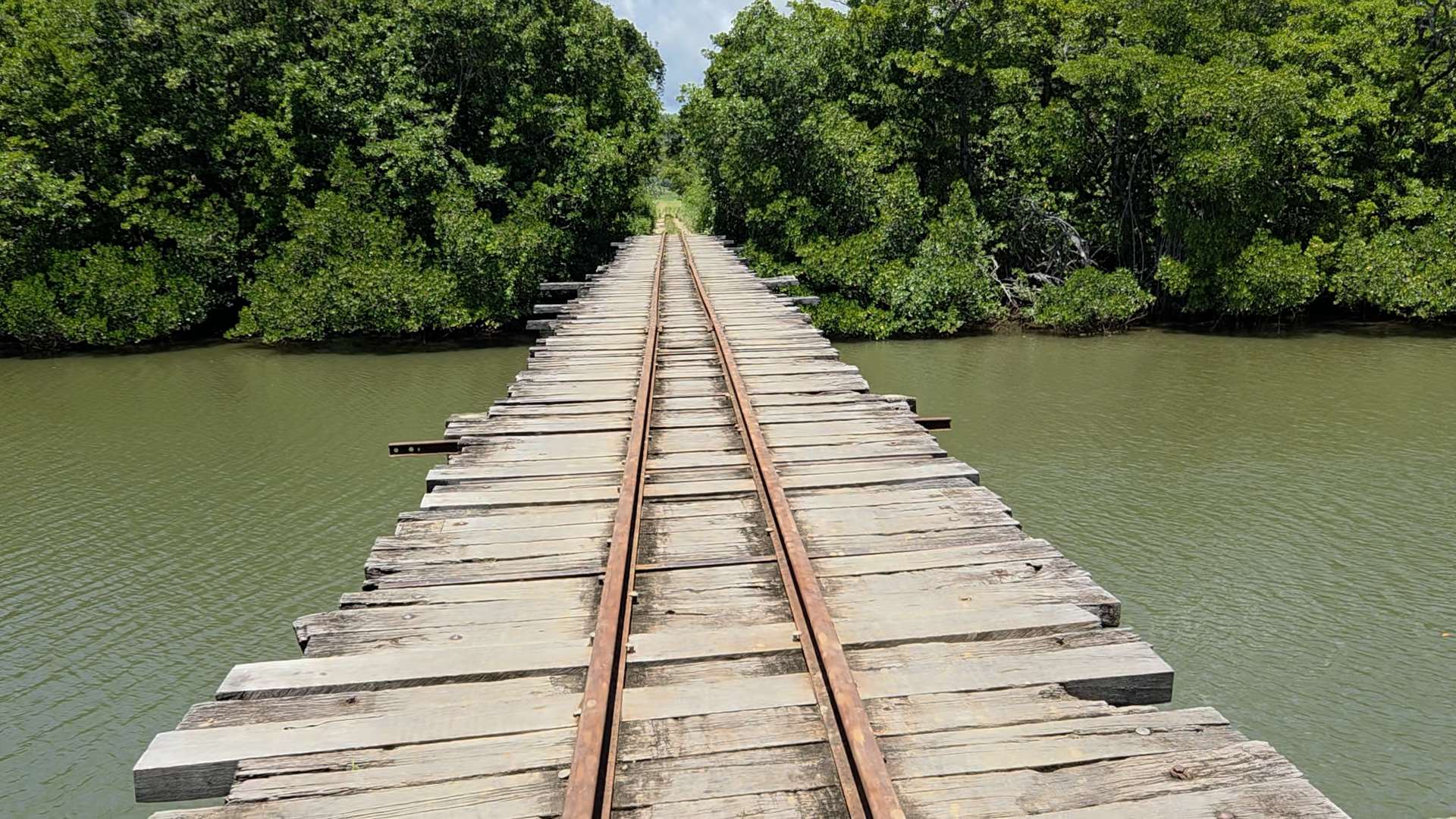
We made our way to Matiabai, driving over cane access roads and tramlines to reach the households. We stared in wonder: how did these people travel to town for shopping from such remote spots? Yet everyone seemed genuinely happy.
Warm tea greeted us at the first stop, and interviews kicked off right away. Thank God, two households shared the same compound: both sugarcane farmers and fishermen. Perfect for rich data on dual livelihoods. We knocked out two quickly.
Next, a household farther out, reachable by a railway platform road. Three down. Then, to the next cluster, people were so eager to be interviewed, sharing freely about mangroves’ role in their lives. We got tired of drinking tea, juice, and munching on snacks they kept offering! By afternoon, we hit eight households. Target smashed.
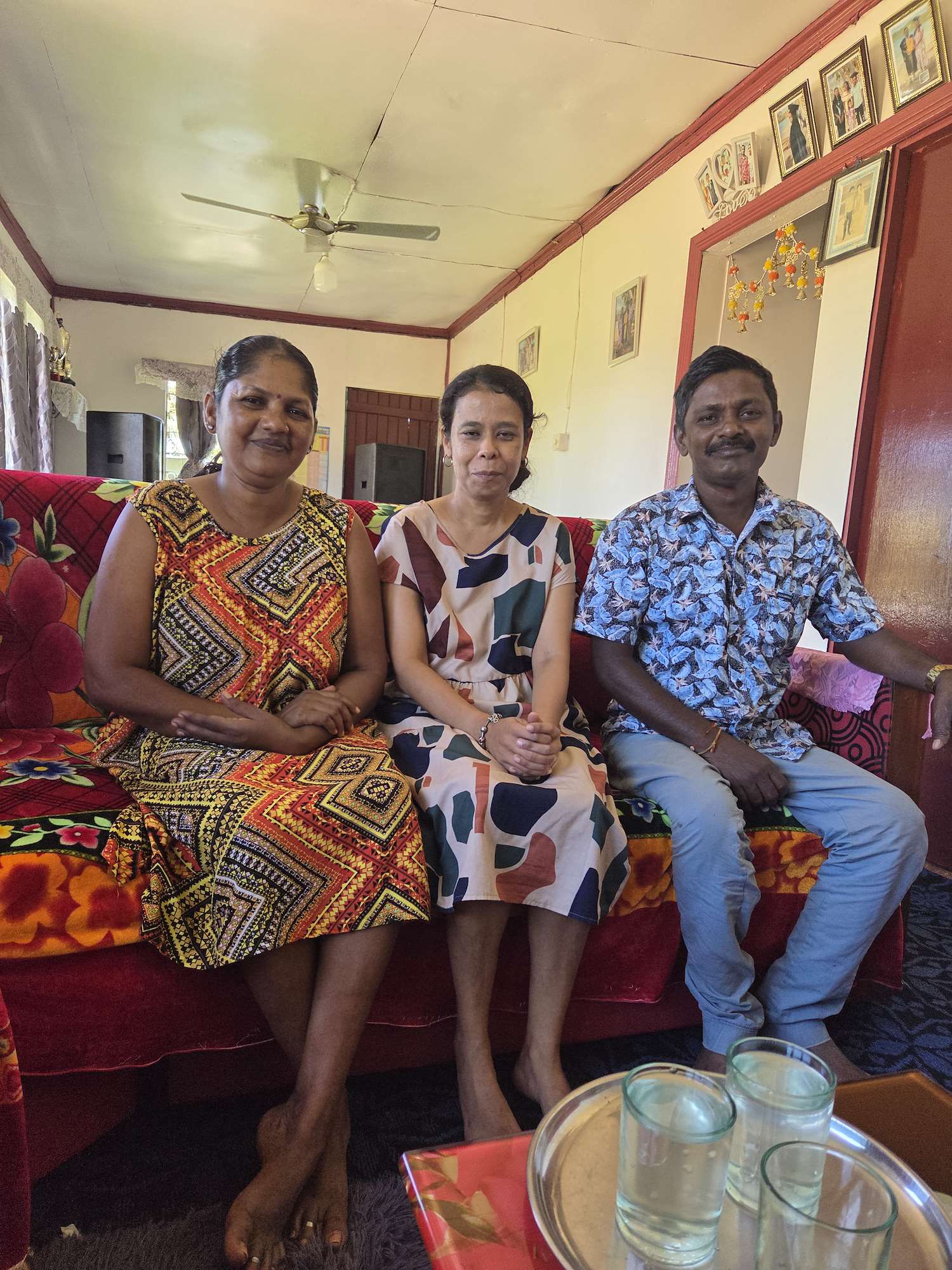
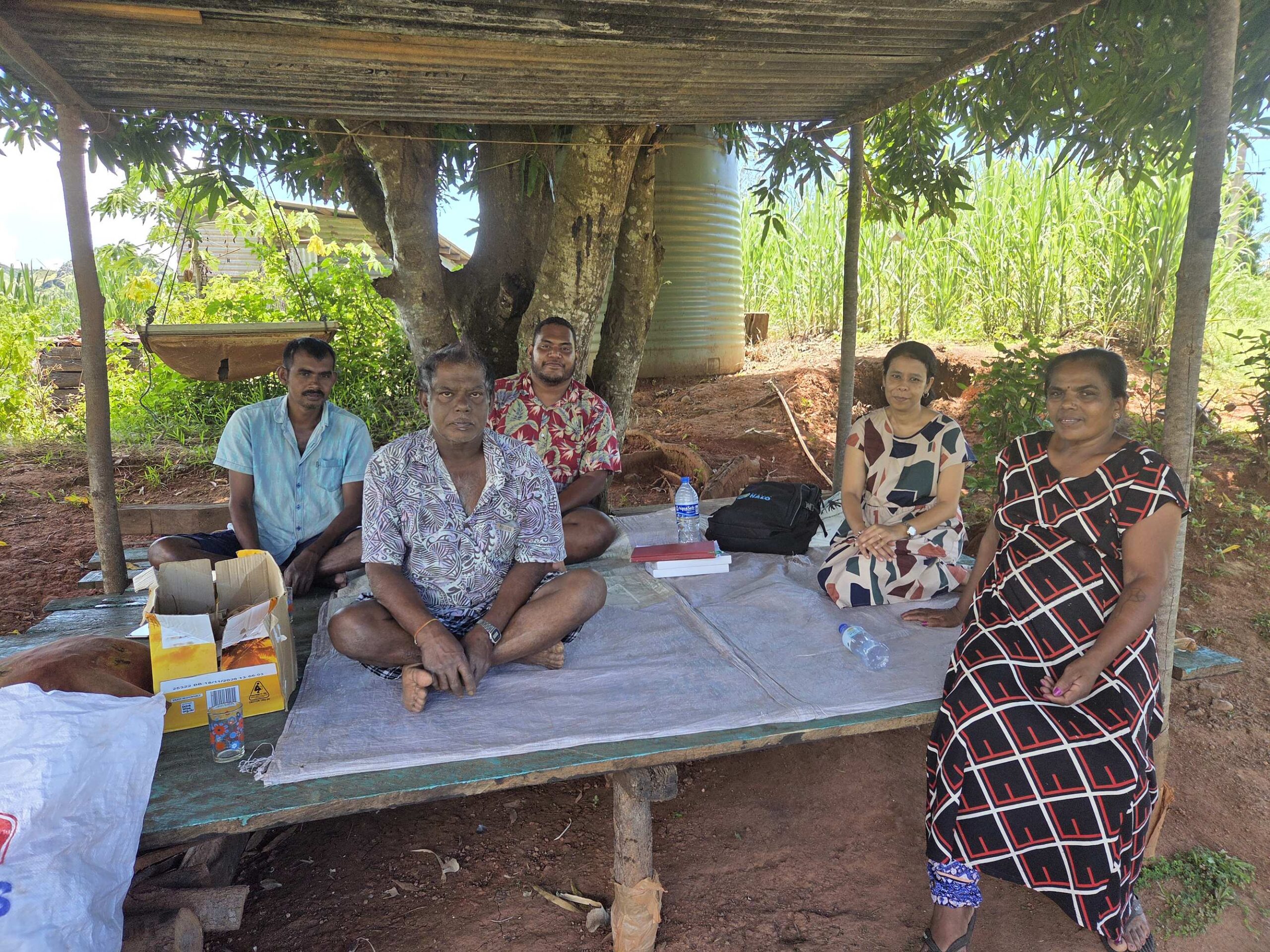
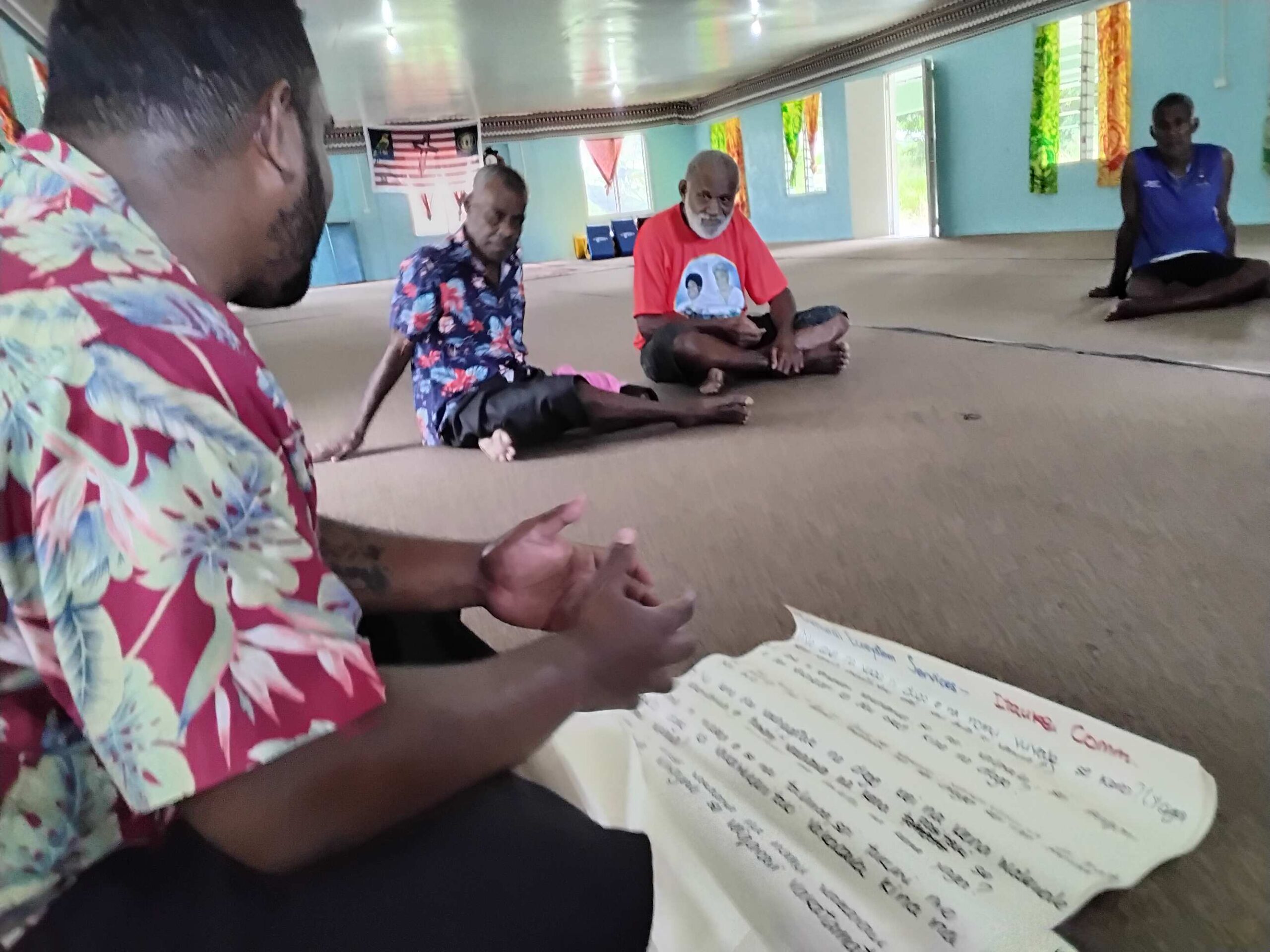
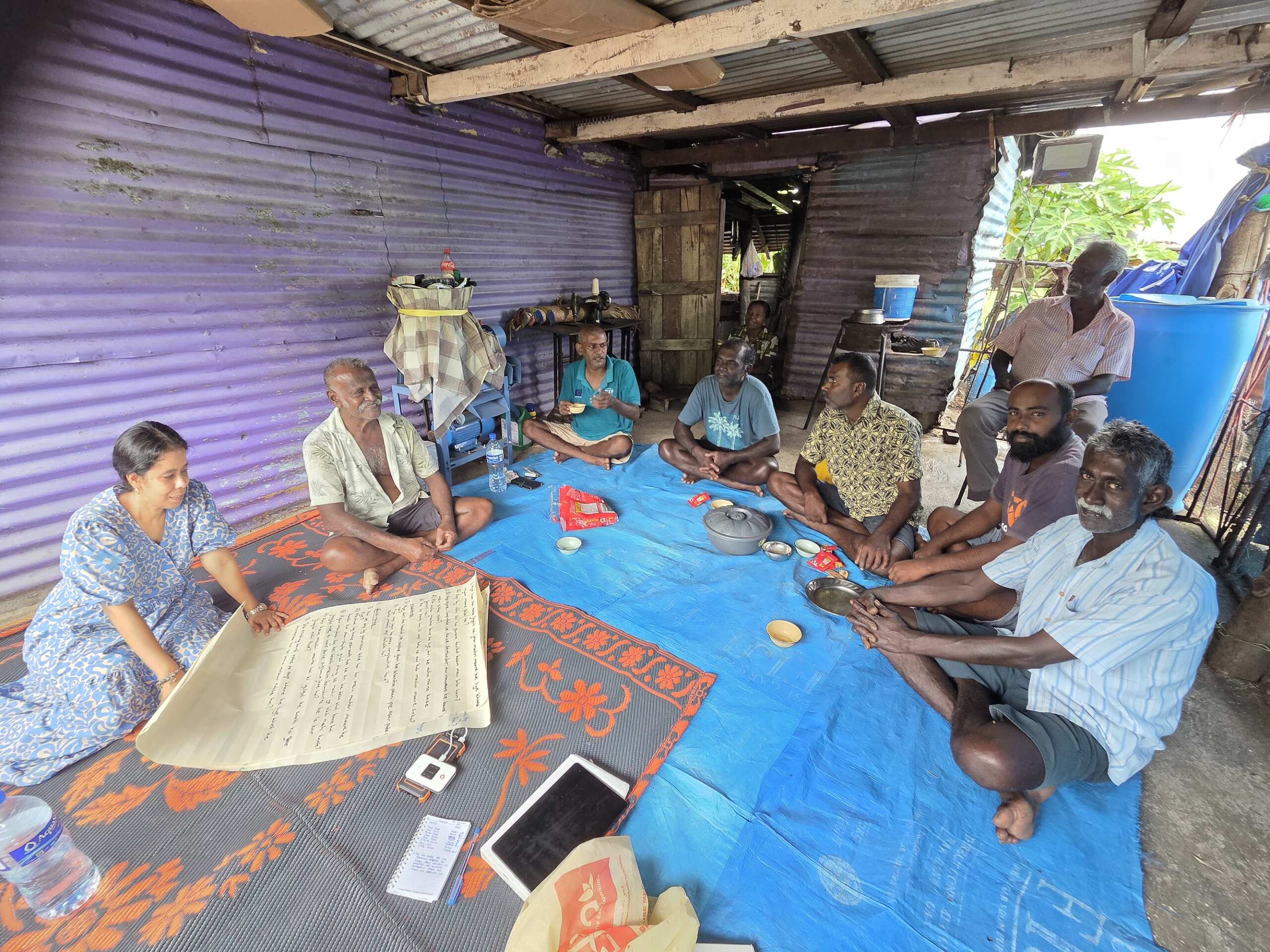
But no rest, we went to Vunivutu for the FGD with elders and leaders. They gave us a warm welcome; clan leaders joined too. The talanoa session was constructive and fascinating. We gained deep insights into mangrove history and cultural values, like sacred sites and traditional uses. “This is the first scientific research in our village,” they said, eyes lighting up. “We’re excited to help!”
Wrapped with a short yaqona session, casual chats, and more research talk. Returned to the homestay by 8 PM. Went to bed satisfied and less tired. We were finally acclimatizing to Labasa’s heat. Looking forward to the next full day of household surveys in Wavuwavu.
Deep Dives in Wavuwavu (21st–23rd February)
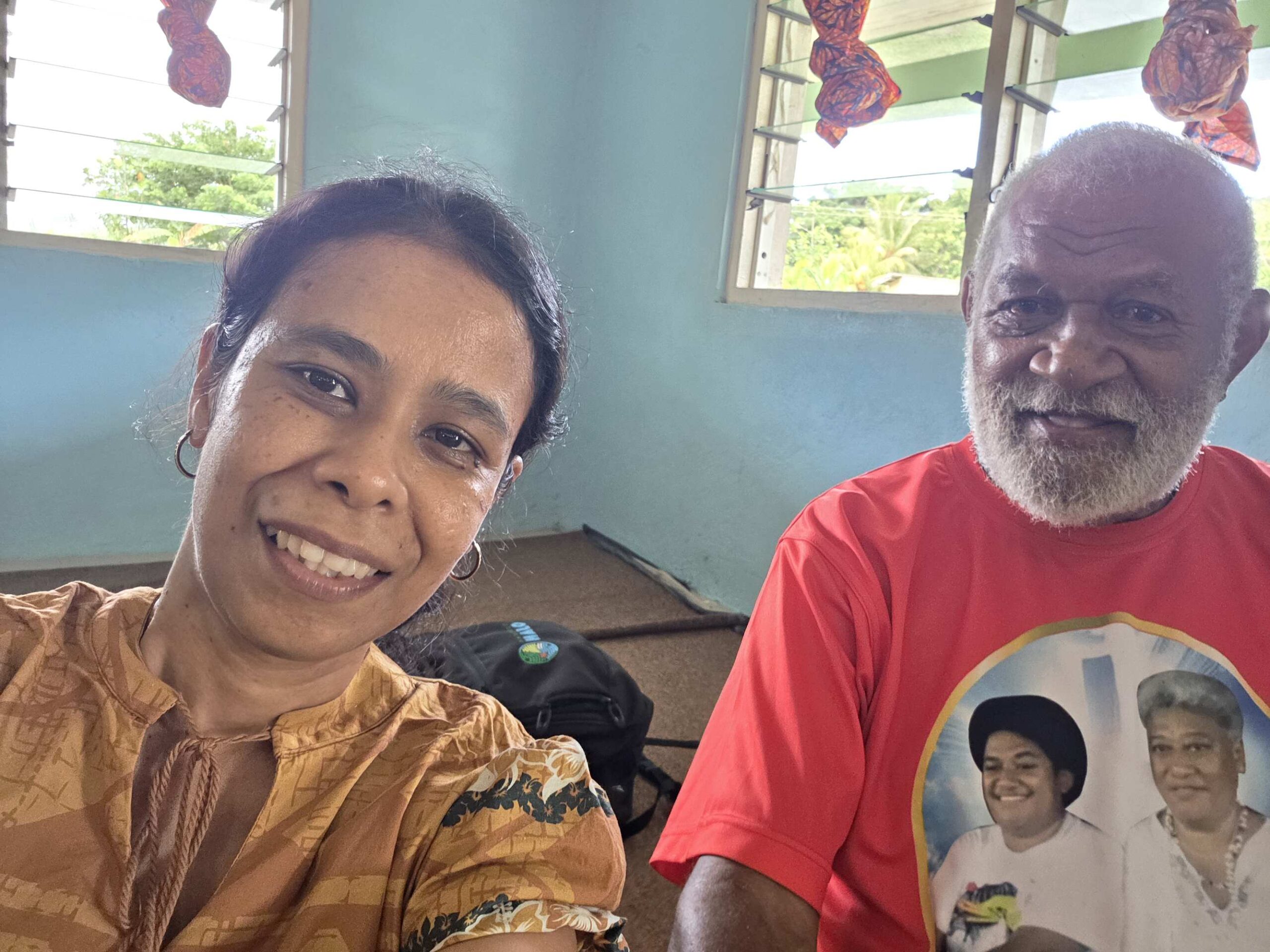
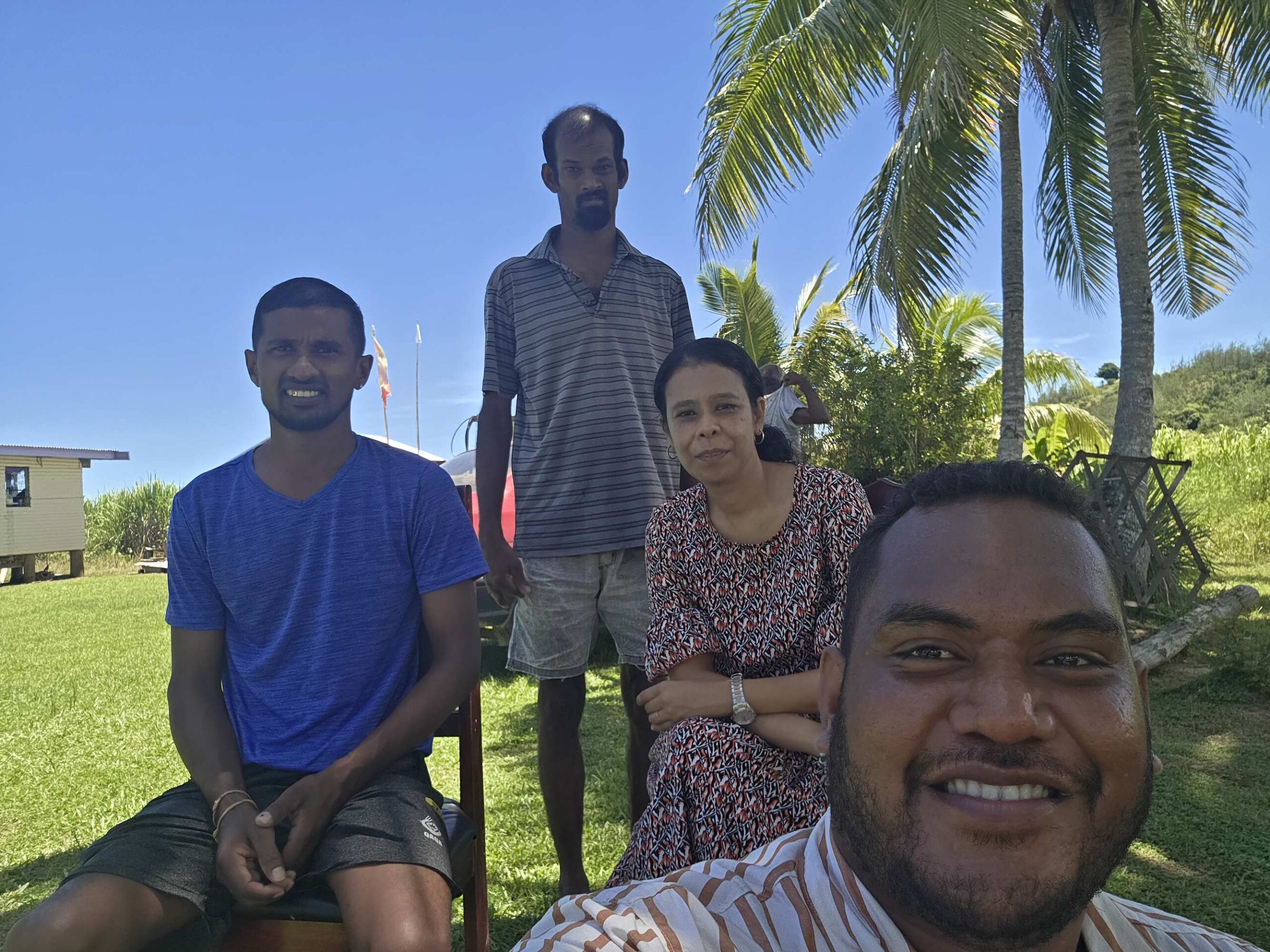
Household data collection was conducted from Saturday to Monday in Wavuwavu. We targeted vulnerable climate-change hotspots: Matiabai, Patia, Naivitia, and Nasiavulevu. With Project Halo backing us, every interview counted toward real resilience data.
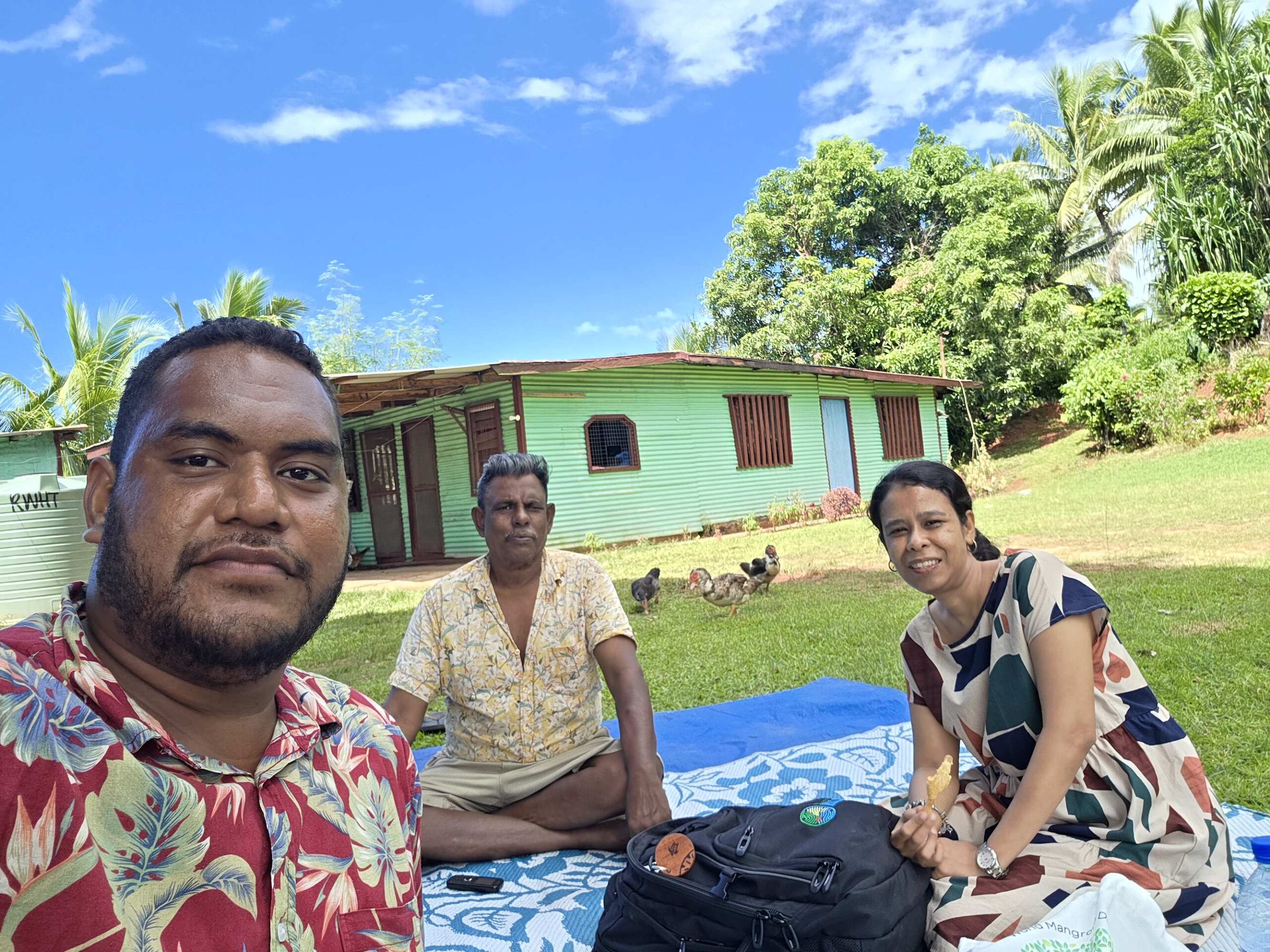
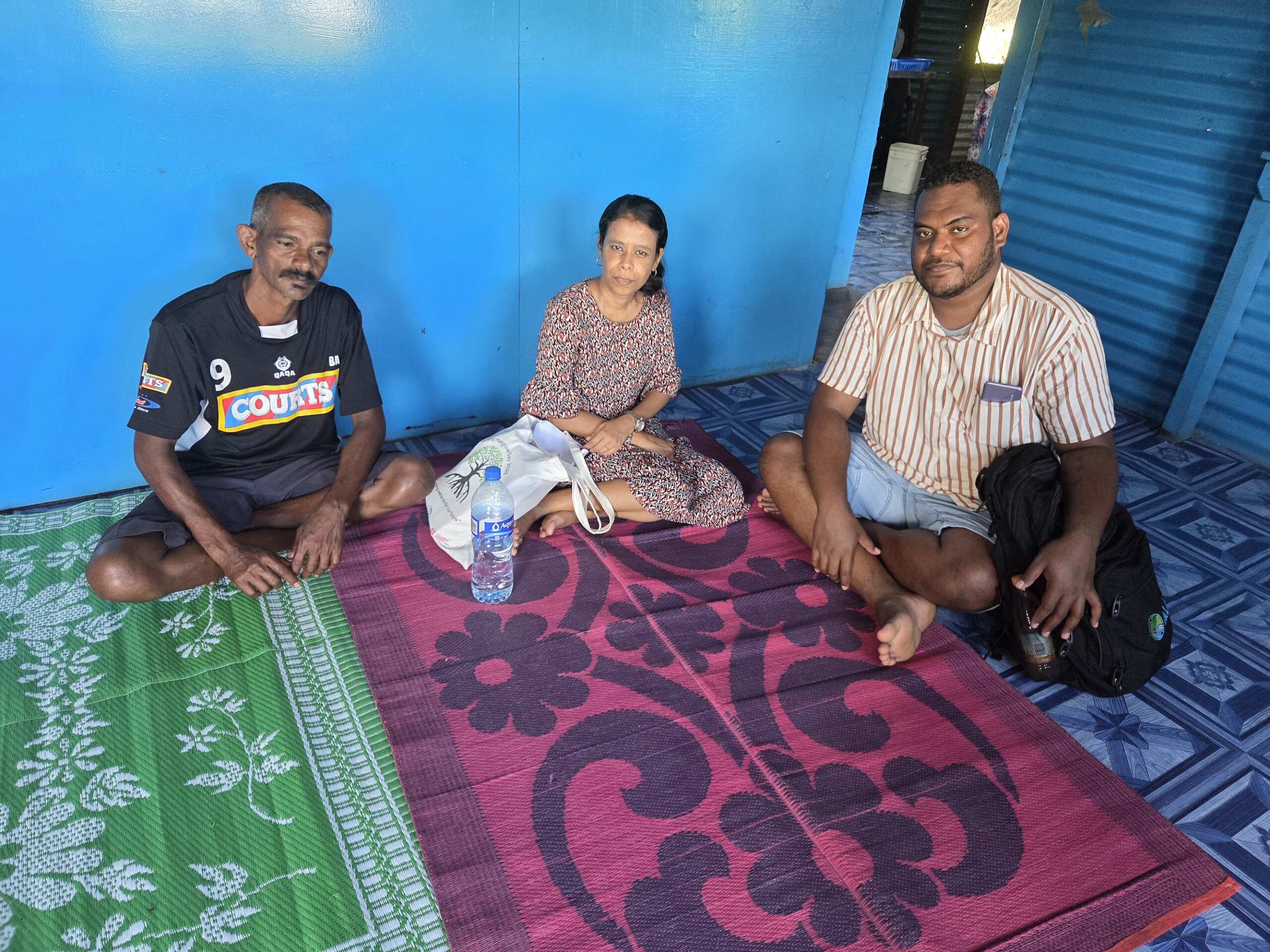
Sugarcane farmers’ stories from Wavuwavu
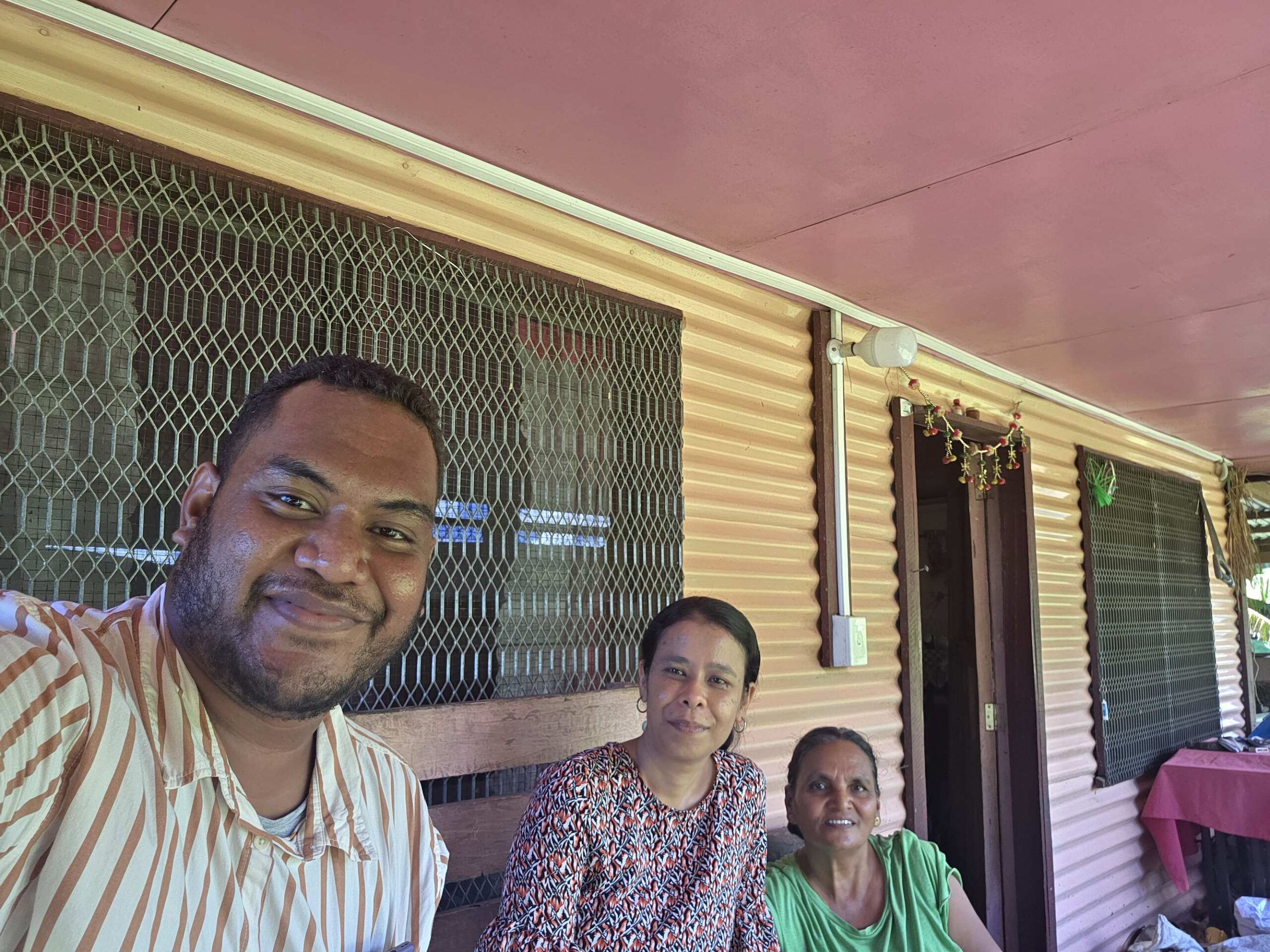
The sugarcane farmers in Wavuwavu spoke with a mixture of frustration and quiet resilience. Many told us that saltwater marginalizes the land, and it becomes infertile for sugarcane production. When the sea inundates their fields, they become very concerned. As one farmer put it, “In the incidence of sea inundation, it is not just the land that suffers, it affects our minds as well.” Several described the psychological impact of watching their fields slowly die, unsure how they would feed their families when the cane yields continued to drop.
Despite this, the same people pointed to the mangroves as their lifeline. “We conserve the mangroves because we get food from the mangroves,” one woman said, “and the mangroves protect us from big waves.” During Cyclone Yasa, they observed that there was massive coastal erosion wherever they did not have mangroves, and they are sure the mangroves shielded their homes and farms. Some recalled the FSC meetings, where they were told not to cut mangroves because the mangroves protect their farms and the railway lines.
After Cyclone Yasa, when parts of the railway lines were damaged, the government had initially considered closing the line. But the villagers insisted. As one elder told us, “If the railway closes, it will cost us more to use trucks to transport our sugarcane. The government had to listen to the demands of the people.” For them, the mangroves protect the railway.
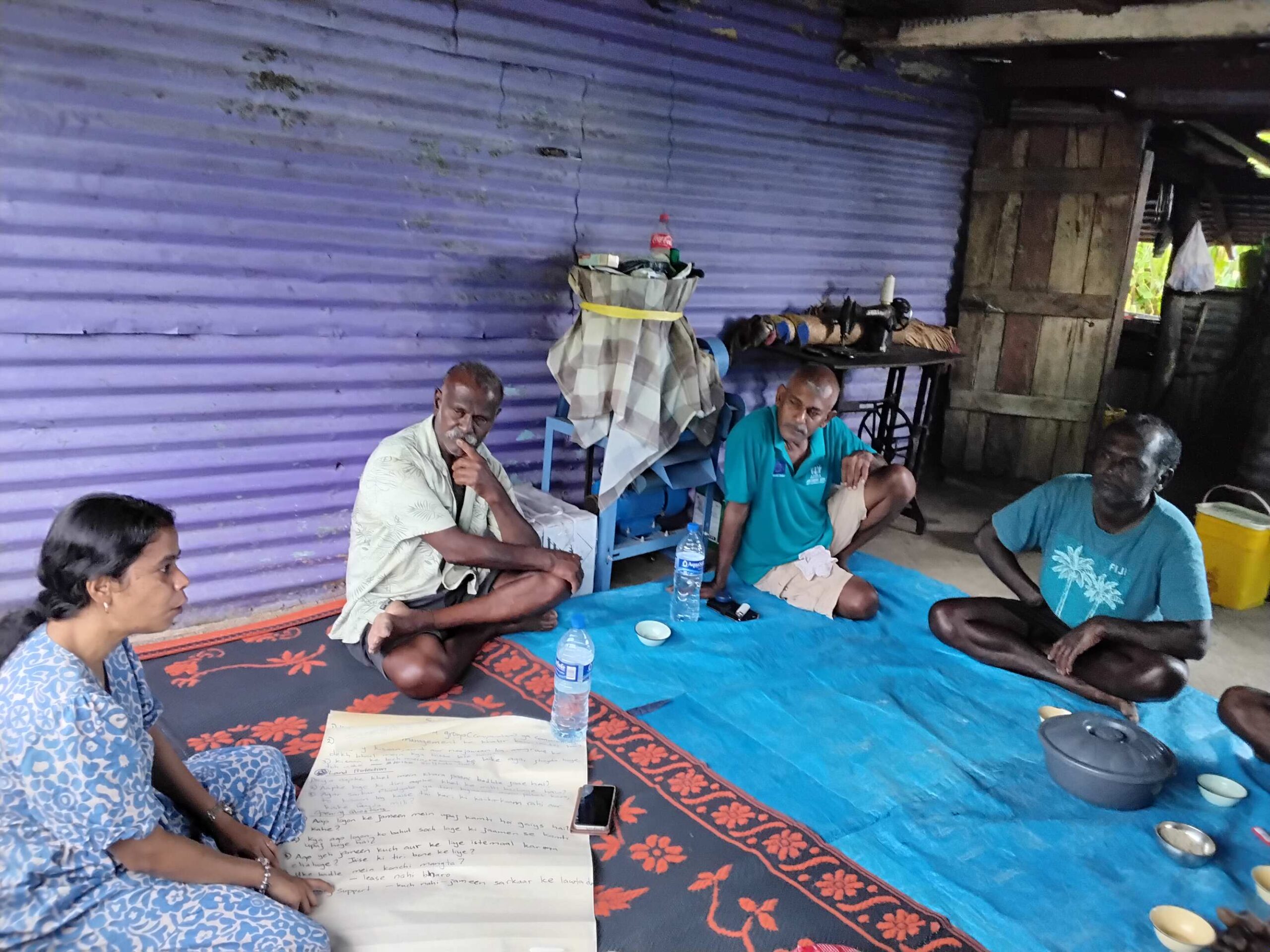
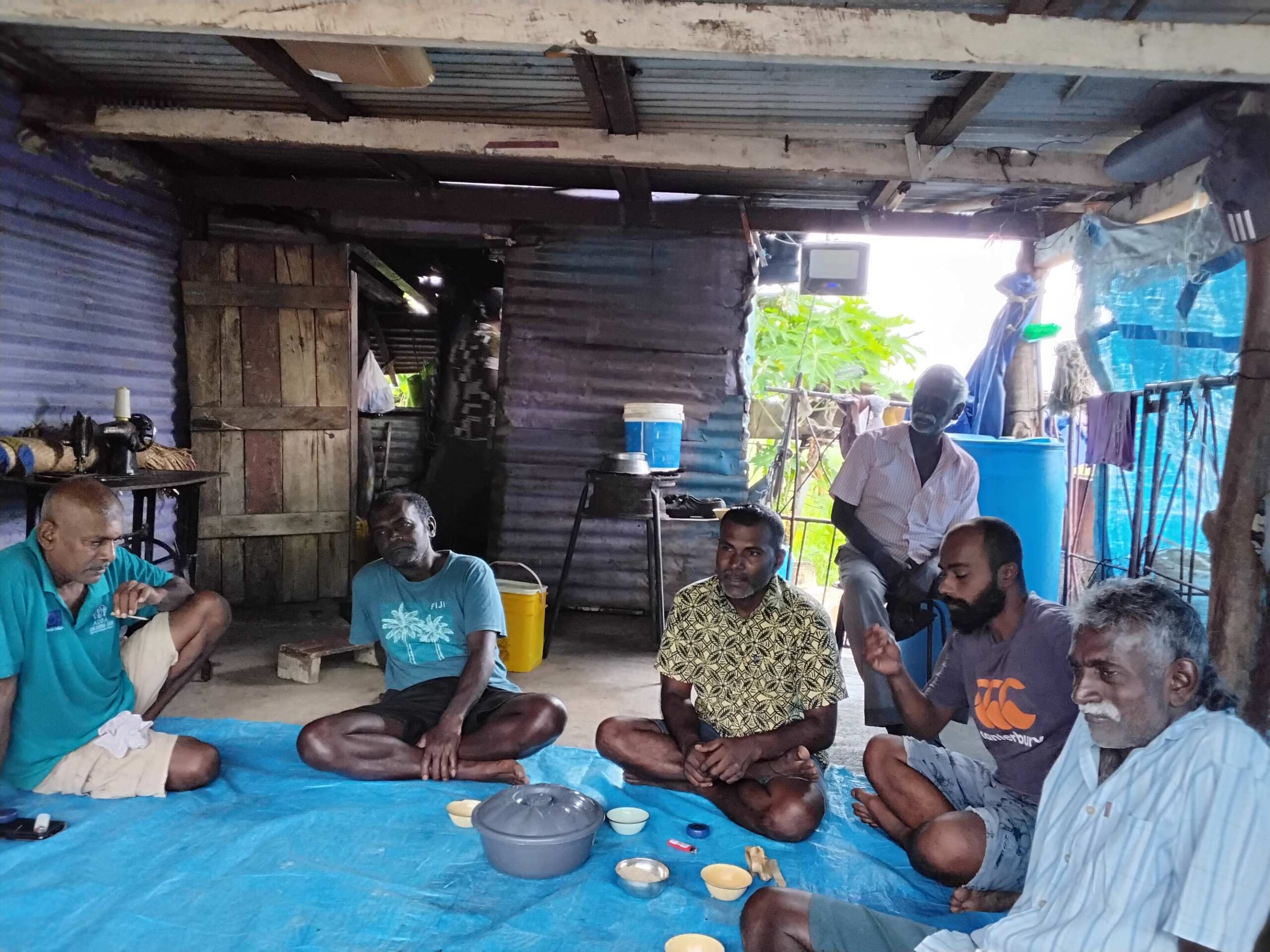
Fishermen’s traditional knowledge
The fishermen of Wavuwavu shared another layer of knowledge passed down from their parents and elders. They told us they were taught about the sea from a young age. “We were told about Andheryia and Anjuriya,” one fisherman explained, referring to the dark and bright phases of the moon.
They also described how the flowering patterns of certain trees signal the fish seasons. “If narkul starts having flowers, then it is the season for Bonito and Walu,” someone said. “When the sugarcane has flowers, then it is the season for kawakawa.” But several added, “These things are changing now. We think it might be because of climate change.” Watching these patterns made them uneasy, because tuning their fishing to the moon and the trees had been the rhythm of their lives.
Women’s knowledge of tides, crabs, and the mangroves
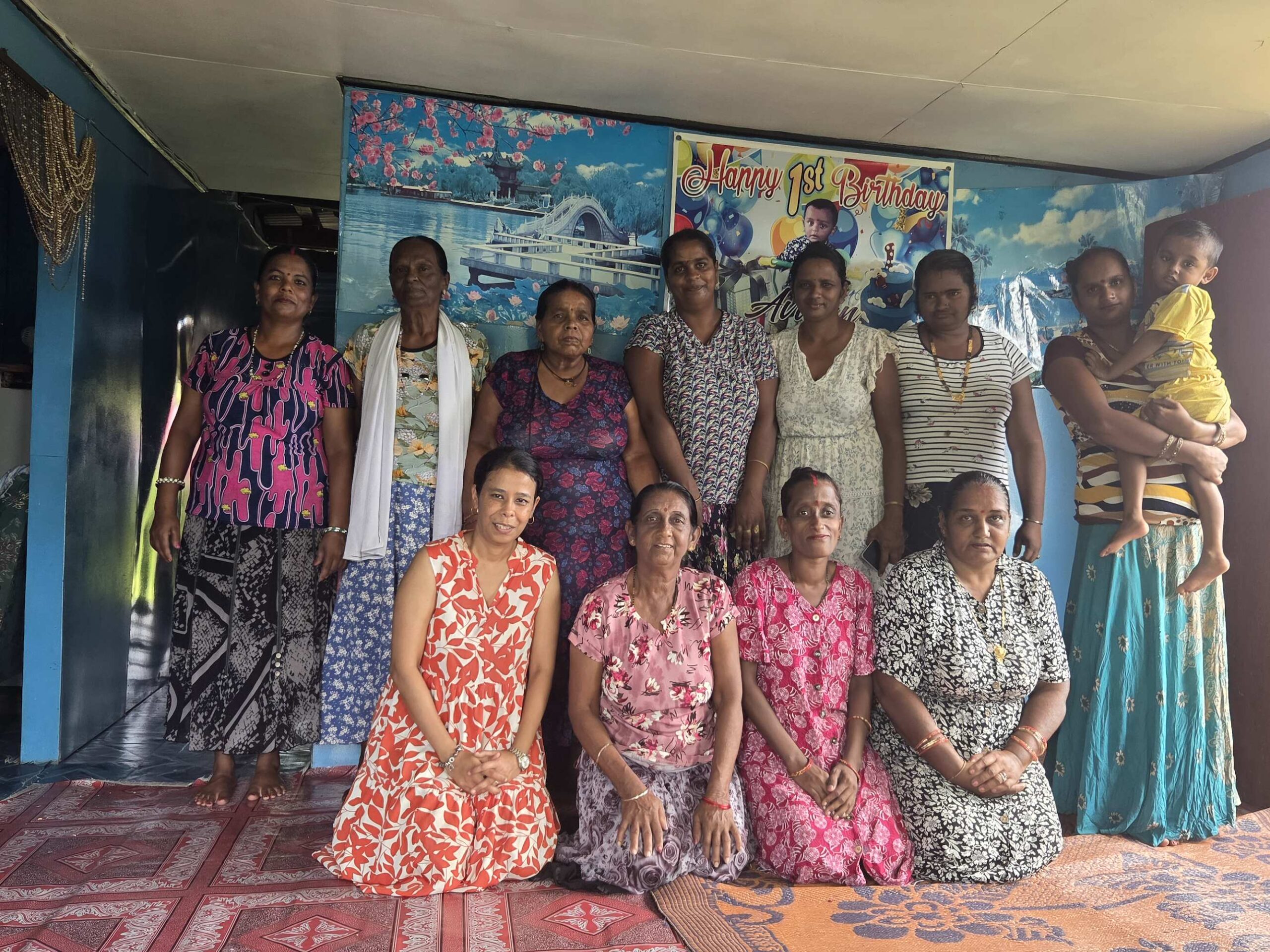
The women’s FGD in Wavuwavu stood out for its intimacy and laughter. The ladies told us they go in groups to the mangroves, mostly to collect Kaikoso (ark shells, Anadara spp.). “We have learnt by watching the elders how to collect Kaikoso,” one of them said. “We know where the shells bury themselves and how to feel them in the mud.” Some women also do fishing along the mangrove edges, mostly catching kabatia (emperor fish) using handlines.
The women’s relationship with the tides and the moon felt especially vivid. They follow the Hindi calendar, paying close attention to Amavasya (the beginning of the new moon, when there is no moon) and Puranmashi (the full moon). “In Amavasya, we have higher tides, more like spring tides, and in Puranmashi also the high tides come higher and stronger,” one woman explained. They mostly go to the mangroves during these times.
There is also a belief that is, they say, proven by experience: “During Puranmasi (when the moon is bright, Anjoriya), the mud crabs have less meat, and during Andheryia (when the moon is dark, Amavasya), the mud crabs have more meat.” As they put it, “We do not know the scientific reason, but that is what we have heard from our elders.” Knowledge of this cycle even helps them decide when to go to catch mud crabs from the market.
Naivitia’s resilience in the face of hardship
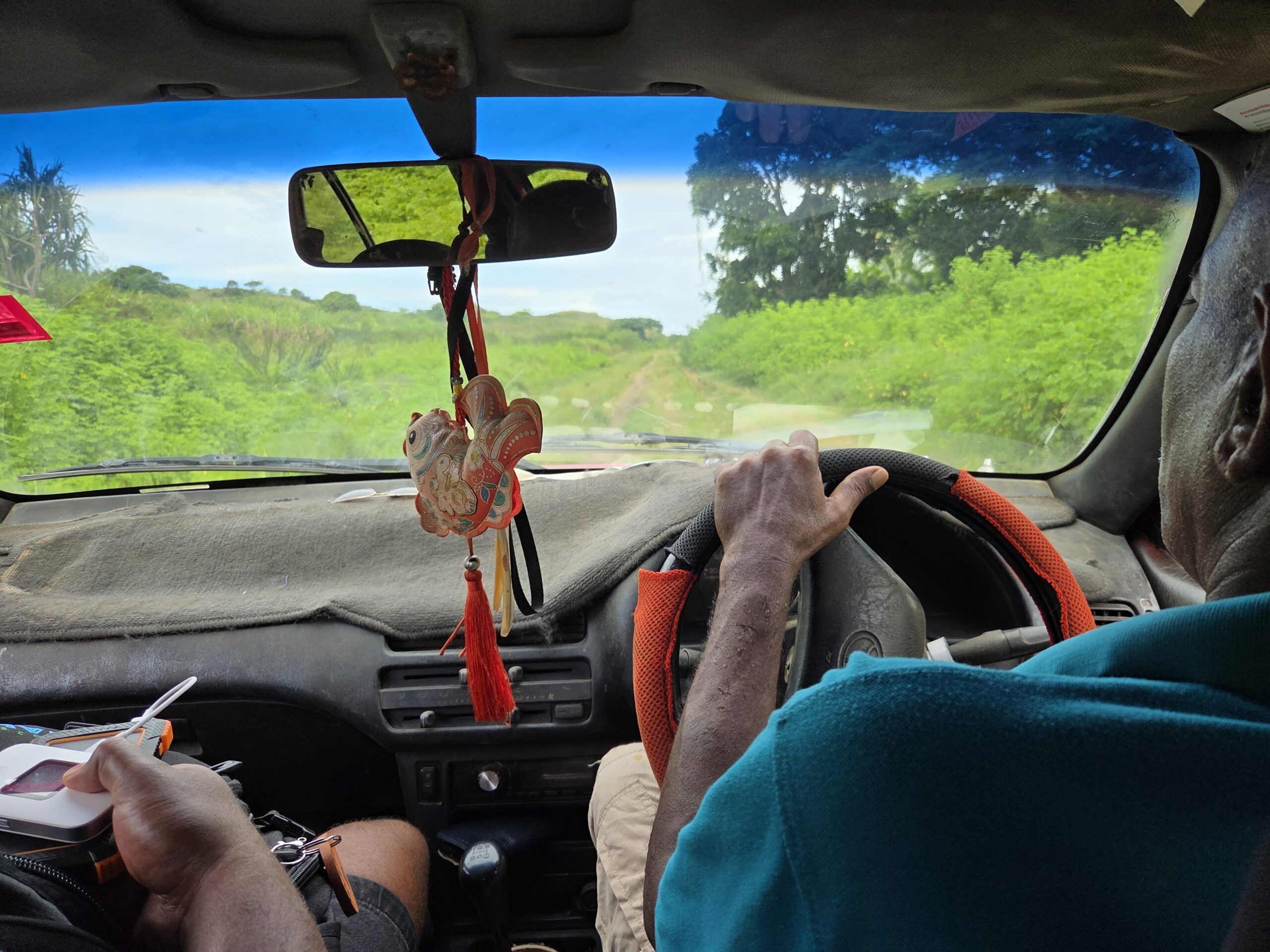
Naivitia, one of the three settlements in Wavuwavu we visited, felt like the frontline of climate vulnerability. The community does not have electricity from Energy Fiji Ltd, nor a proper water supply. To reach Naivitia, we had to drive along the railway platform, which doubled as the road.
I remember the day we went there in a Toyota Tercel, with our driver carefully navigating the narrow platform. When we arrived, torrential rain lashed down, and we wondered how we would safely return. We waited until the afternoon, when the rain eased and the skies cleared, then drove back to Wavuwavu with great care. The experience humbled me: it gave me a small glimpse into the daily challenges the people of Naivitia face.
Yet, even in Naivitia, people spoke with pride about their connection to the mangroves. They told us that, despite the lack of electricity and piped water, the mangroves still provide food and shelter from the big waves. The generational continuity of knowledge, about crabs, tides, and seasons, was clear, even if some of these patterns were beginning to shift.
The sugarcane farmers’ dependence on mangroves
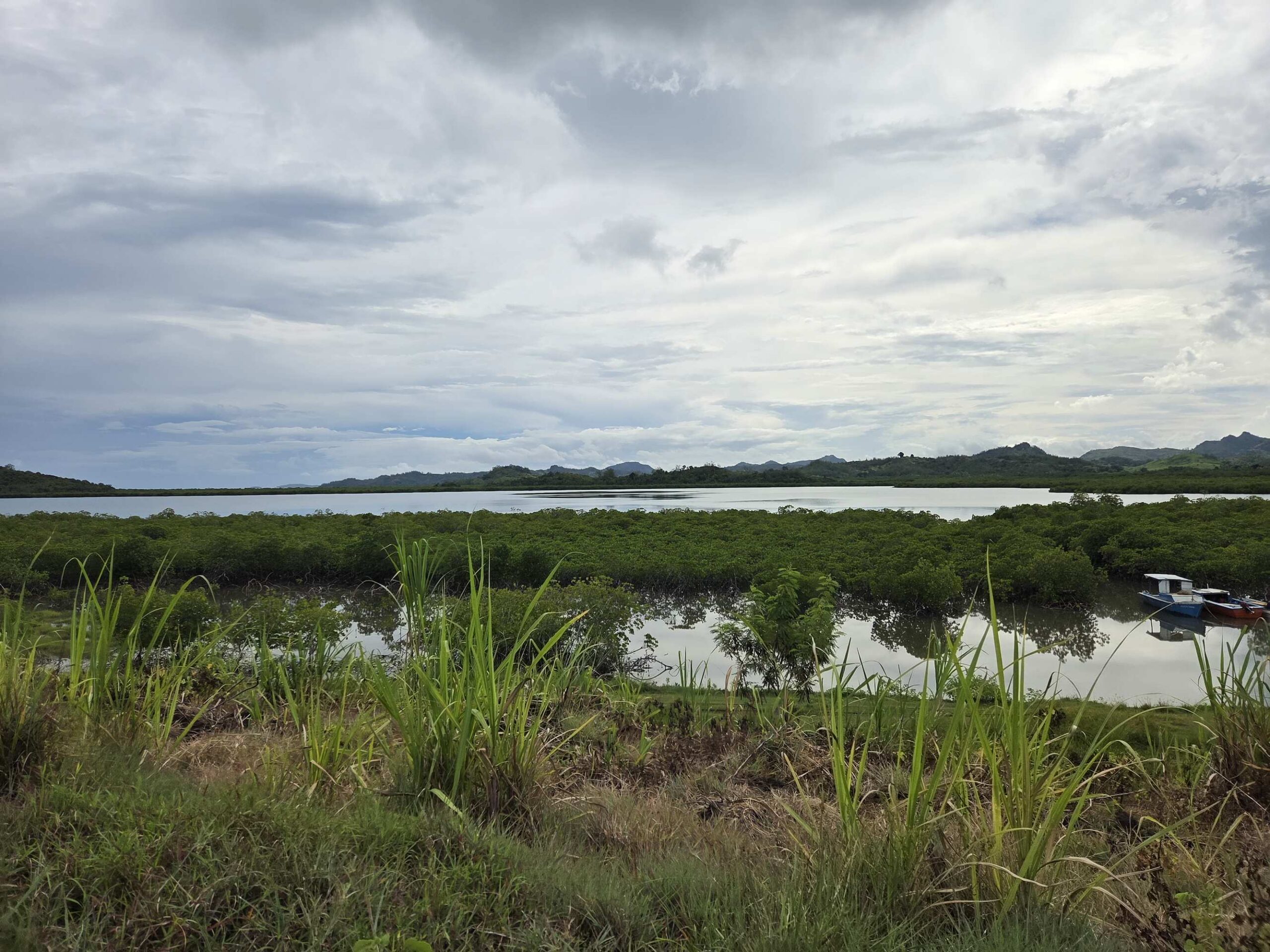
The sugarcane farmers in Wavuwavu, though, continued to stand out. Some of them described their farms as “lost to the sea,” with saltwater intruding into the soil and the fertility and yield constantly decreasing. They felt stuck, unsure how they could adapt or support themselves once the sugar industry became less reliable.
Yet, in the same breath, they emphasized how the mangroves helped them survive. “We depend on the mangroves for food, and for extra income when the cane earnings are low,” one farmer told us. “The mangroves are our safety net.” Almost every household we interviewed in Wavuwavu relied on mangroves, either for subsistence food or for small incomes from crabs, fish, and firewood. For them, the mangrove was not an abstract ecosystem, it was food, income, and coastal protection rolled into one.
Four intense days, rich data, real connections. Wavuwavu showed climate’s front lines up close, and the way people weave traditional knowledge, practical adaptation, and cultural belief into their everyday lives. Onward, with the stories of Vunivutu waiting next
Deep Talanoa in Vunivutu (24th–26th February)
The working week shifted gears on Monday, 24th February: I got full access to my UNSW Qualtrics account, including the offline version, just in time for the household survey in Vunivutu. That felt like a major milestone. I was finally “superpowered” to return to Vunivutu and collect data with the full digital setup. If I did not get access, then I would have to delay the survey by a few days.
Coming back from Naivitia and seeing the hardships people faced there stayed with me. That evening, electricity cut off from late afternoon until around 9 p.m., and I waited for the power to come back so I could set up and test the offline Qualtrics on my laptop. At 9 p.m., when the lights flicked back on, I stayed up into the early hours configuring my UNSW account and the offline version. I am grateful to Dansie and Laura, who made sure the offline version arrived in time.
By Tuesday morning, after a short three-hour sleep, I felt ready. The advantage of having the offline version was clear: I could now truly support my Research Assistant, Mr. Epeli Waqa, who had been working around the clock to keep the survey momentum going. Epeli, you are hardworking and very efficient. Thank you for always staying calm and organized, even on the busiest days, and tolerating my work demands.
In Vunivutu, the second language of many iTaukei is Fiji Hindi, and that made the conversations especially warm and personal. Several elders spoke to me in Fiji Hindi, asking, “Ladki, tum kaise hai? Tum kaha se aaya?” (Girl, how are you? Where are you from?). I laughed silently to myself. I was glad they still saw me as a “girl,” even at this age. The people in Vunivutu were cooperative, curious, and keen to share their stories.
Household surveys with offline Qualtrics
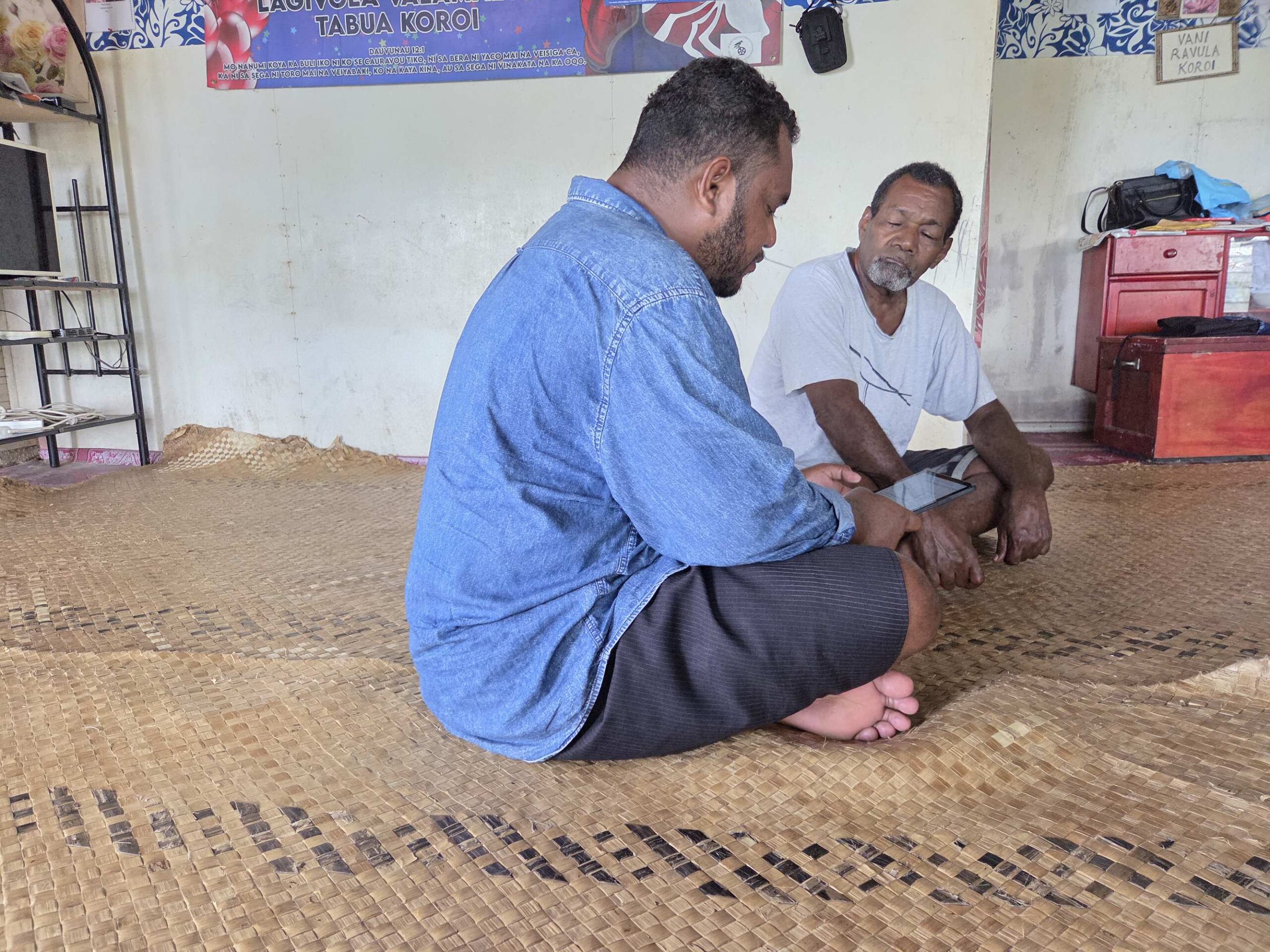
The return to Vunivutu also meant resuming the household surveys with the new offline Qualtrics. The day started early, with Epeli and me heading out to the first few households. Because there was no internet again, the offline mode worked perfectly. This made data collection easier and faster and also no need for double work.
We managed to complete several households that day, and the feedback from the community remained encouraging. Almost every household we interviewed relied on mangroves, either for subsistence food or for small incomes from selling fish or crabs.
FGD with women, fishers, youths, and leaders
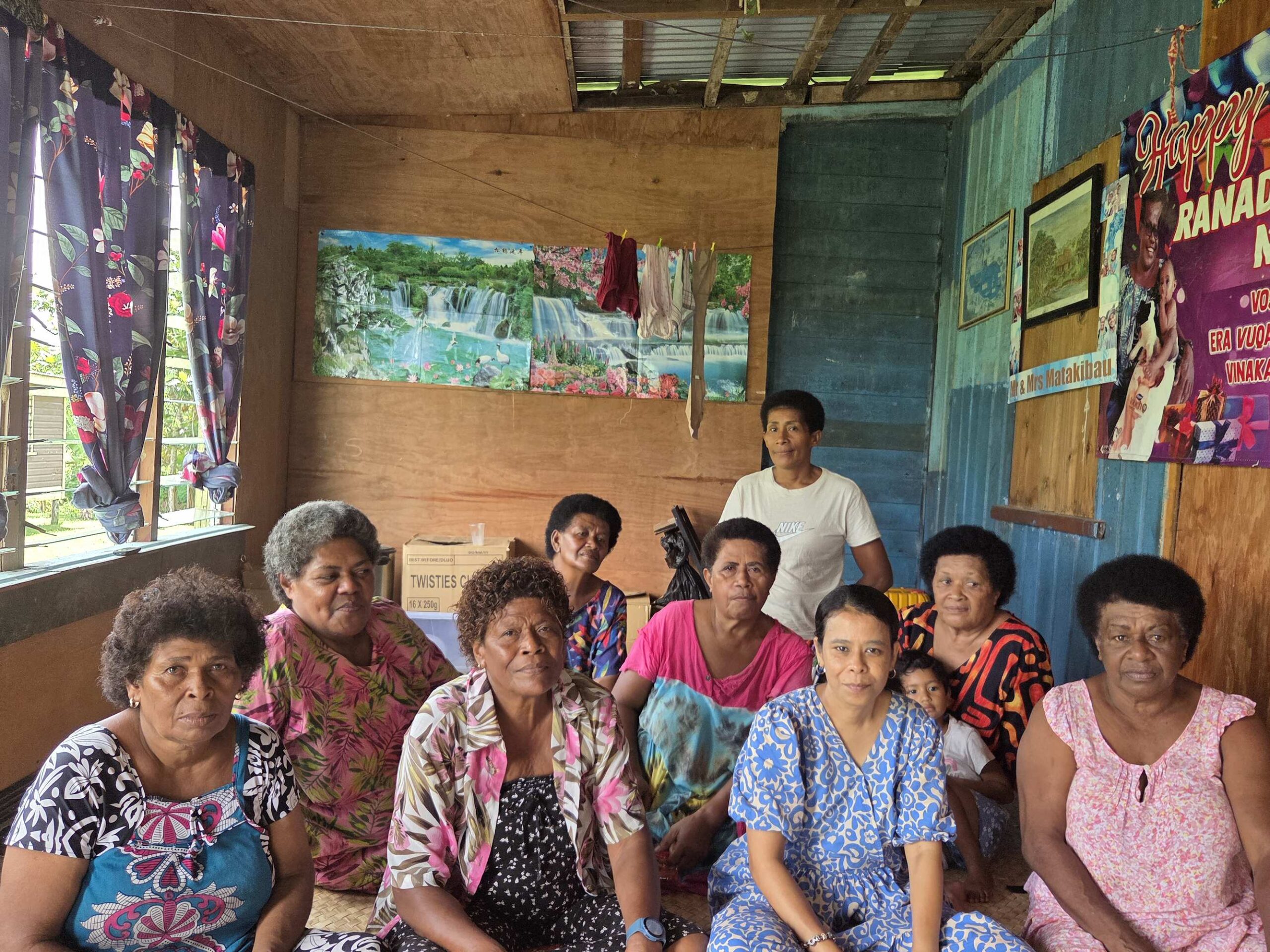
In the afternoon, the Turaga ni Koro organised the long-awaited focus group discussions with the women, the fishers, and the youth. The venues were simple, someone’s verandah, or in the village hall. But the conversations were rich and lively.
Sitting in the FGD circle with the women of Vunivutu, I could feel the warmth of their stories as much as the afternoon heat. The women explained that they were in charge of making the traditional attire for clan elders during special cultural ceremonies, like the investiture of the new chief or the appointment of a new turaga ni koro after the passing of the former title holder. They printed symbolic designs on masi, using dyes derived from mangroves, linking the forest directly to their ceremonial life.
They also told us that during big feasts, the women went to gather fuel wood from the mangroves to cook for the village. As one woman put it, the mangrove was not just a forest, it was a pantry and a kitchen combined.
When the fishers joined the talanoa, their messages were equally clear. “If the mangrove is healthy, we catch more fish,” one villager said. “The elders have always told us that the better the mangroves, the more fish we can catch.” They explained how oceanic fish migrate into the mangroves to spawn and then move back out to the sea once they mature. “If the nurseries are not disturbed, the catch will always be there,” another fisher added. But they also worried: modern nets, especially those used in the mangrove swamps, were over-exploiting the fish and the mangrove habitat, and that could slowly break the migration cycle and reduce the abundance of fish in the ocean.
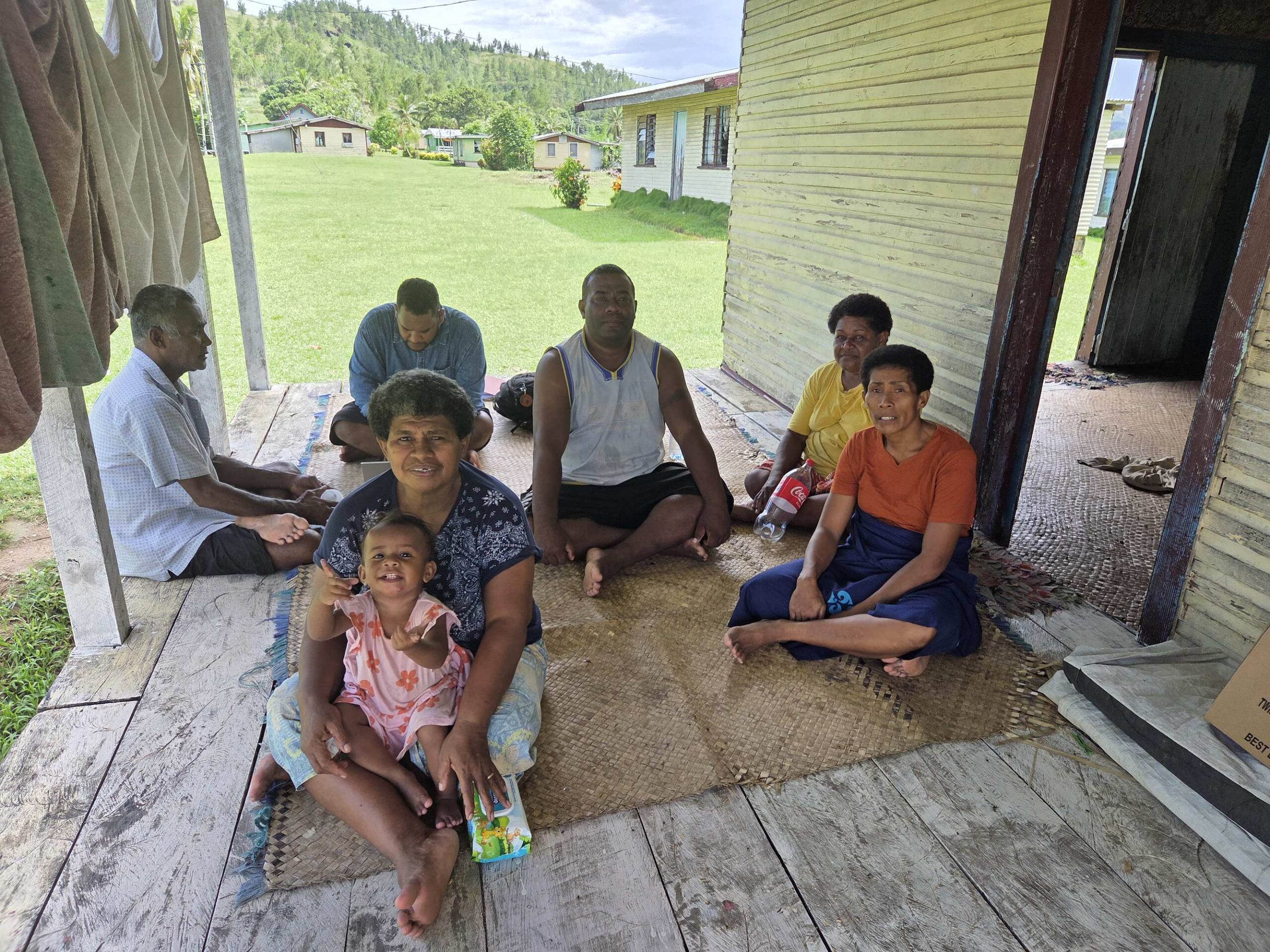
The youth group was smaller, but their voices carried a different kind of tension. They said they valued mangroves, especially as a source of fish and wood, but they did not feel a strong personal connection to them. They were not aware of the traditional link between their tikina and mangroves, and several did not know how the district of Nadogo got its name.
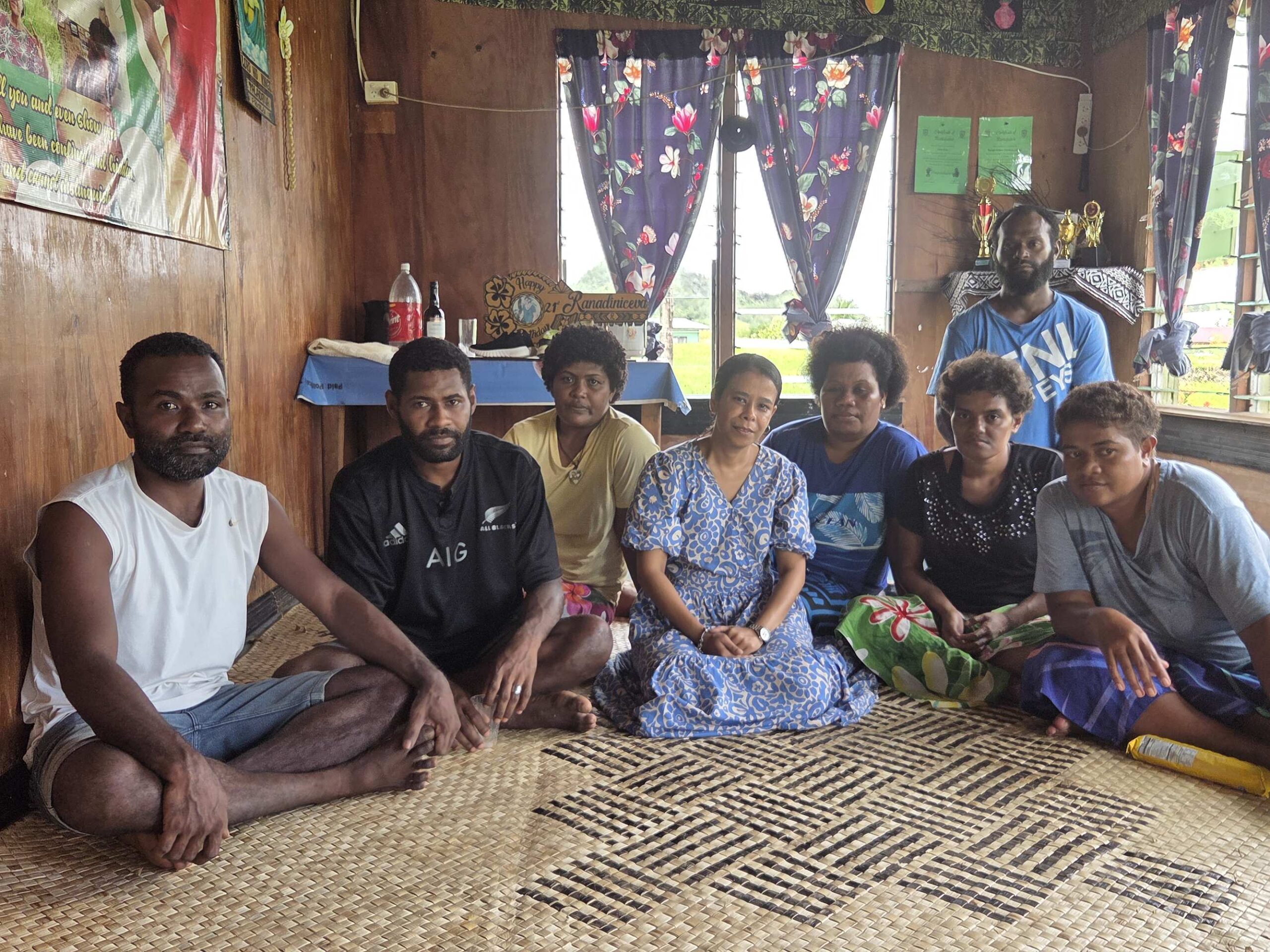
That knowledge still lived strongly with the elders and leaders. They explained that the village of Vunivutu fell within the district of Nadogo, ruled by the Tui Nadogo. “Nadogo” literally means Mangrove, and the elders said the vanua of Nadogo was likened to the roots of the mangrove. The dense, interlocked root system and the thick canopy, they said, symbolised tightly knitted kinship relations that had held together “from before till now.” Just as the interlocked roots softened the impact of waves and storm surges, so the unity of the people of Nadogo would help them overcome obstacles.
They also shared that the story of migration lay in the names of certain villages. One village, not located on the coast but still home to mangroves, bore a name connected to the forest. The story was that early settlers had brought mangrove plants from their coastal home and replanted them in the interior, so they would always remember where they came from.
Listening to all of this, I could see the generational gap in the conversation. The elders and leaders carried a deep, cultural understanding of the mangroves. At the same time, the youth understood their value only in practical, everyday terms and were often unaware of the traditional stories and meanings. For my PhD, it was a powerful reminder that mangroves are not just ecological systems; they are woven into people’s vanua, their tikina, and their identity. The cultural values of the mangrove, once stronger in every generation, are now the bridge that must be reinforced if conservation is to last.
By the end of these three days in Vunivutu, I felt both satisfied and thoughtful. The data was filling up, the relationships with the village were deepening, and the heat of Labasa, though still intense, felt more bearable, as if my body and mind had finally adjusted. I went to bed on Thursday night, tired but happy, satisfied that I had completed the household surveys and FGDs in Wavuwavu and Vunivutu within nine days. Yes, we worked hard and around the clock, but we managed to complete our work. I knew the next step would be heading back to Mouta and Wainikoro Boca for more household surveys, but the stories of Vunivutu would stay with me, especially the way the people of Nadogo saw the mangrove not only as a forest, but as a living metaphor for their unity and resilience.
Two sites down and four more to go, but our resilience and momentum were still high. Join us next week for my next chapter of data collection.
Note: This is Part 1 of a 3 part series