
In September, two Project Halo PhD scholars from The University of the South Pacific, Salote Nasalo and Jasma Devi, represented the project at the STEMtastic Adventures! with Young Pacific Leaders Symposium in Nadi. The regional three day event brought together youth leaders, educators, policymakers, and innovators from across the Pacific to explore STEM education, climate resilience, and youth empowerment.
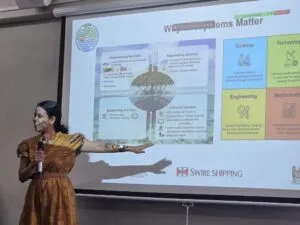
Under the theme Climate and Conservation, Salote and Jasma delivered a presentation titled: “Climate Resilience Literacy Through Nature-Based Solutions.” Their session highlighted the importance of strengthening climate literacy and using interactive tools to communicate the role of nature based solutions in coastal protection.
The scholars also showcased the mini-Wave Flume: Mangrove Overtopping Attenuation Model (MOAM). Developed by Dr. Laura Montano Luna and Dr. Brad Henderson from the University of the New South Wales (UNSW), the model visually demonstrates how mangroves reduce wave energy and provide natural coastal defence. Interactive tools like MOAM help translate complex coastal science into practical and accessible learning resources. This supports meaningful community engagement and empowers local decision makers by demonstrating the real world value of mangrove ecosystems.
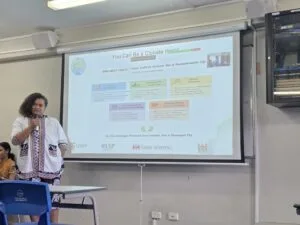
The symposium also reinforced the importance of combining traditional knowledge, community experience and STEM based innovation to build effective climate resilience solutions tailored to Pacific contexts.
Project Halo is committed to advancing Pacific led research and empowering leaders in climate and coastal resilience. Participation in regional forums such as STEMtastic helps foster collaboration, knowledge sharing, and a shared vision for resilient and thriving Pacific communities.