
The University of the South Pacific (USP) reaffirms its commitment to sustainable research through its collaboration with the University of New South Wales (UNSW) on Project Halo, a research project focused on mangrove restoration, societal benefit, and climate resilience in Fiji.
This interdisciplinary research applies innovative nature-based solutions to address coastal environmental degradation and the opportunity to implement nature-based solutions while empowering local communities.
 USP recently hosted a welcome event at the Laucala Campus in Suva for the incoming USP PhD scholarship recipients for Project Halophyte. The USP PhD scholars are Jasma Devi, Salote Nasalo, Muzammil Ali and Jimmy Kereseka.
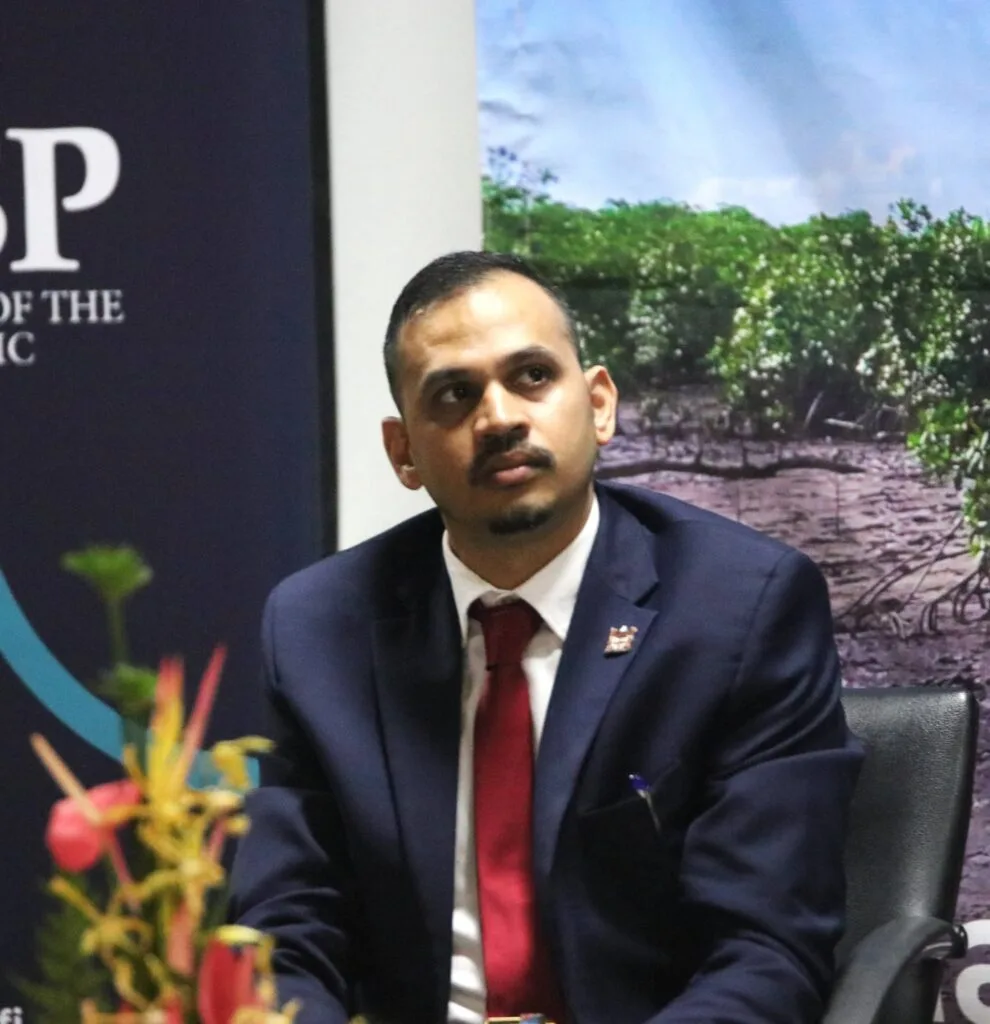
Chief Guest and Permanent Secretary for the Ministry of Environment and Climate Change, Dr Sivendra Michael, lauded the initiative as a testament to the power of collaboration in tackling the region’s most pressing environmental challenges.
“This project is more than just research—it is a commitment to protecting our people, our ecosystems, and our future. When government, academia, multilateral agencies, and philanthropy come together, we create solutions that don’t just sit in reports, but bring real change to communities,” he said.
Dr Michael also urged scholars to think beyond academia and actively contribute to shaping policies that drive meaningful action.
“Research must not exist in isolation. We need our scholars to step into spaces where decisions are made—to influence policies, shape climate negotiations, and ensure that their work translates into action on the ground,” he emphasised.
 USP Vice-Chancellor and President, Professor Pal Ahluwalia, emphasised USP’s dedication to the 2050 Blue Pacific Strategy and the 2030 Sustainable Development Agenda, stating, “At USP, we’re deeply committed to fostering research that directly contributes to sustainable development and climate resilience.”
He highlighted that this initiative would not only advance scientific discovery but also deliver a tangible, real-world impact.
“We celebrate the next generation of environmental researchers—our exceptional PhD scholars. Their collaborative research will directly contribute to the development and implementation of innovative, nature-based solutions for mangrove restoration and the measurement of environmental and societal benefits within Fiji,” Professor Ahluwalia said.
“This landmark collaboration, made possible by the generosity of Swire Shipping and crucial support from the Fijian Government, UNESCO, and the Pacific Community (SPC), directly addresses one of the most pressing global environmental challenges: the widespread degradation of mangrove ecosystems.”
 UNSW academic and project co-lead, Dr Andrew Dansie, highlighted that Project Halo served as a pilot project for the region and the world.
“Research and innovation to bring large-scale environmental and social benefits is needed in the Pacific to improve lives, livelihoods and climate resilience,” he stated.
“The role of research towards a sustainable path forward is essential if we are to do more with less. We need to rapidly change our resource consumption patterns and build a solid environmental base on which to meet 2030 SDGs (Sustainable Development Goals) as well as 2050 carbon goals.”
Dr Dansie said the four scholars welcomed by USP also included four PhD students at UNSW. The eight students would work collaboratively and be supervised by a joint USP and UNSW team.
“Further, each student has the ability if they wish to spend 12 months at the partner institution and graduate with a cotutelle or joint PhD degree. How better to equip this generation than being able to solve global environmental problems with regional leadership and local ability.”