
For a growing group of people across Oceania, the 26th of July is a day to celebrate not only mangroves, but the people who will help protect them into the future. World Mangrove Day (officially the International Day for the Conservation of the Mangrove Ecosystem) is an opportunity to recognise how Project Halo is cultivating the next generation of mangrove experts while creating a climate-resilient future for Pacific communities.
Project Halo is a collaboration between the University of the South Pacific (USP) and UNSW Sydney with support from Swire Shipping, the Government of Fiji, The Pacific Community (SPC) and UNESCO. The team is working with communities to harness the power of mangroves to protect coastlines, increase biodiversity, sequester carbon and support livelihoods.
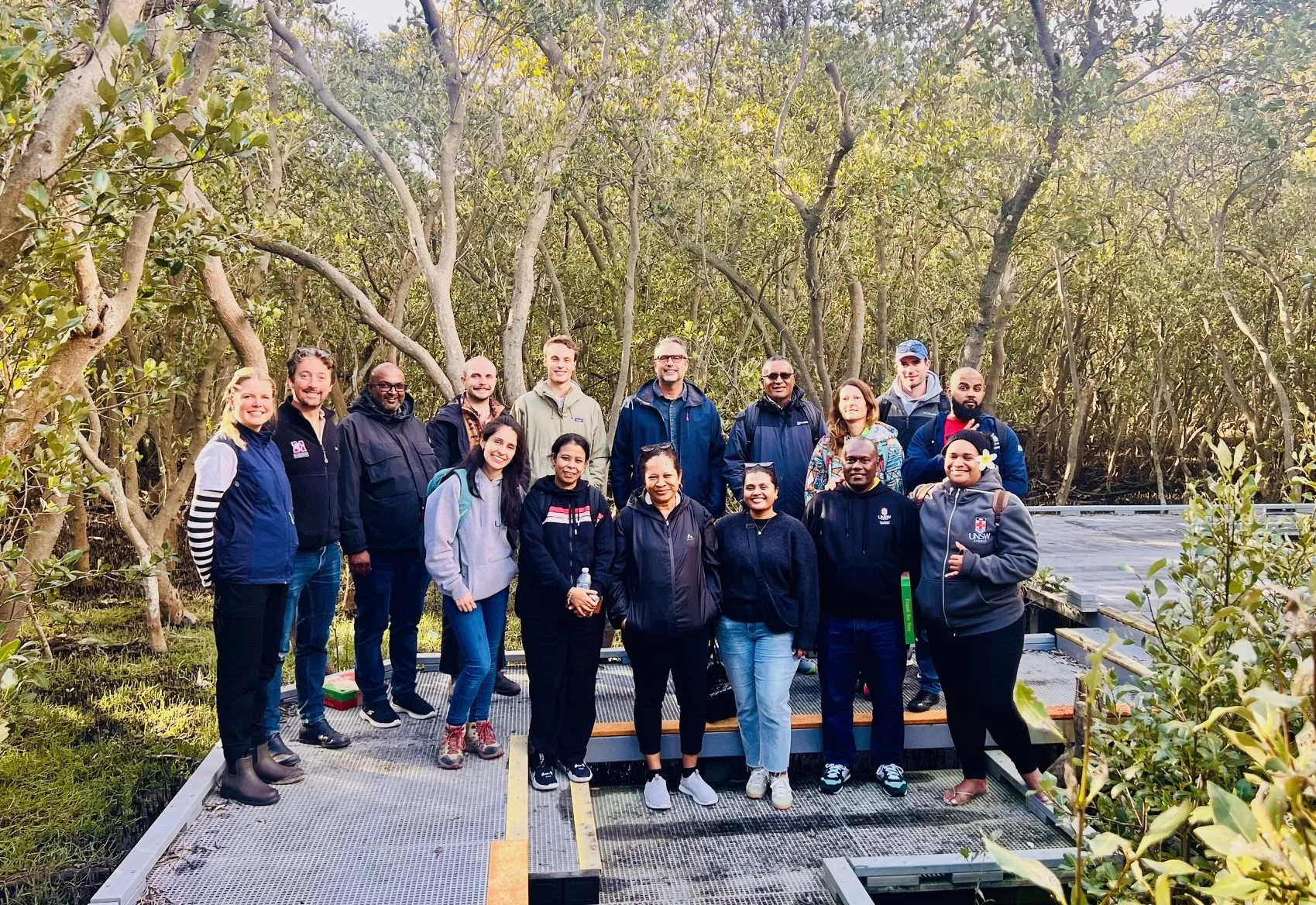
Project Halo Co-lead Dr. Isoa Korovulavula describes mangroves as much more than a plant, saying, “Mangroves keep us alive like a tireless beating heart, filters dirt that keep coral sparkling , calm the savaging waves that could wreck our homes, provider of sustenance to all.”
But across the Pacific and many other parts of the world, mangroves have been cleared or are severely degraded, leaving coastlines and communities increasingly vulnerable. Through the process of restoring these mangrove ecosystems in Fiji, Project Halo is also investing in the people who will protect them into the future.
Through scholarships and cotutelle PhD programmes, where candidates are jointly enrolled at both UNSW and USP, researchers are exploring issues related to ecology, engineering, social science, financing mechanisms, and governance. This is building expertise that supports the Pacific Island nation’s urgent call and need to respond to climate change.
Investing in future mangrove leaders
Project Halo’s eleven PhD and two Masters researchers come from diverse backgrounds and have different areas of expertise. Project Halo Co-Lead A/Prof Andrew Dansie says that the project has attracted some extraordinary people.
“Project Halo has attracted exceptional early career researchers and PhD students who are passionate about using science and engineering to solve important environmental and societal challenges.”
“The innovation and excellence they provide across a breadth of disciplines is essential to the success of Project Halo and we are fortunate to have such an outstanding and interactive team.”
Four of these researchers, based at USP, are bringing Pacific knowledge, lived experience and local expertise into the project.
One of these emerging mangrove experts is Salote Nasolo, a mangrove ecologist and passionate advocate for climate action. Salote says that many Pacific communities, particularly indigenous groups such as the iTaukei of Fiji, already possess a deep, embedded understanding of the value of mangroves.
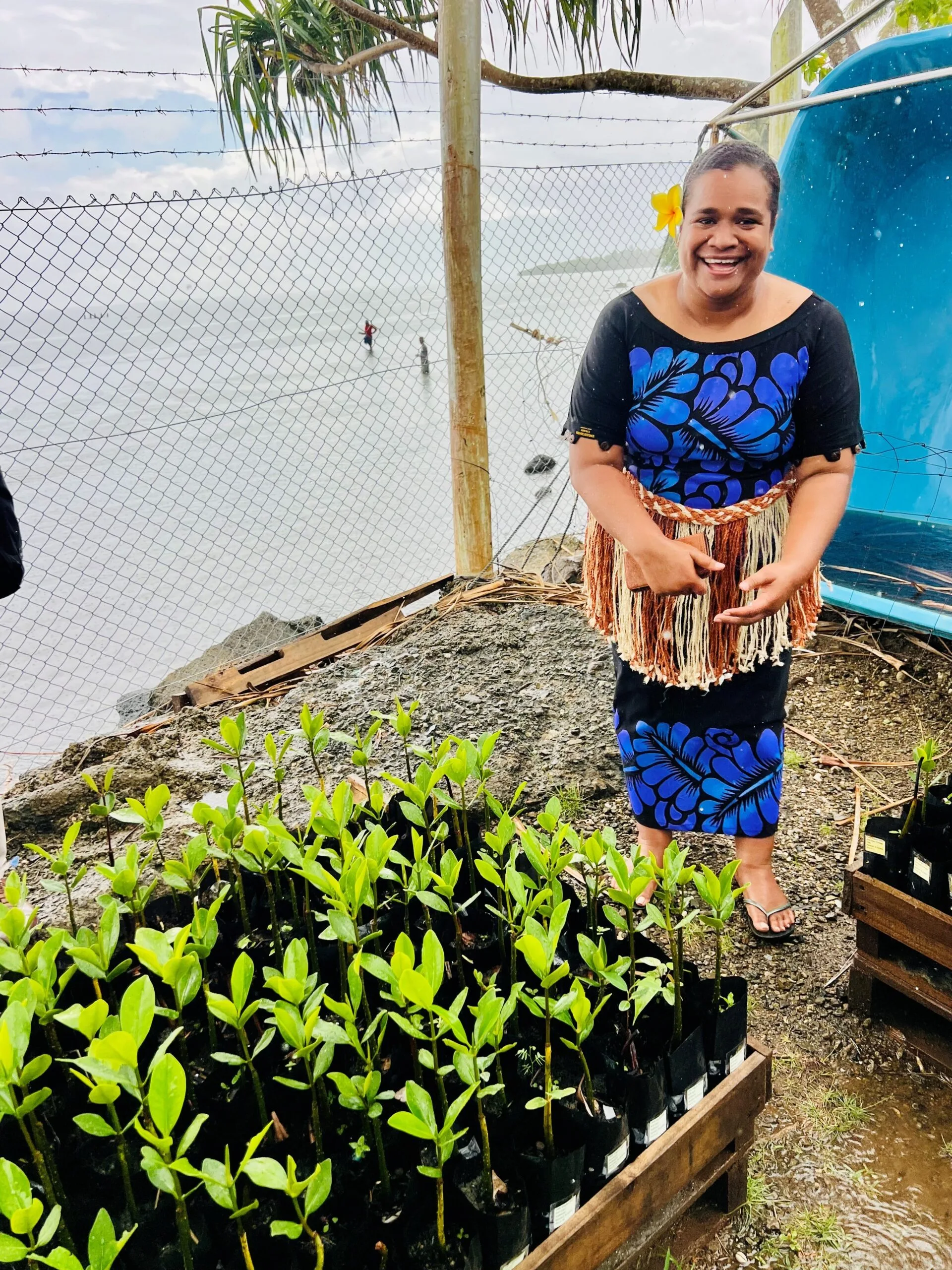
“Mangrove ecosystems, as part of our vanua, hold profound cultural, spiritual, and ecological significance: they are sites of traditional rituals, habitats for totemic species, and essential to sustaining social cohesion and cultural knowledge systems,” says Salote.
Through her PhD, Salote’s research is contributing to the tidal restoration activities of Project Halo, determining the optimal conditions for Pacific species of mangroves to regenerate naturally in degraded coastal lands. PhD Candidate Jimmy Kereseka’s research is also focused on tidal restoration and the characteristics of both healthy and degraded mangrove ecosystems. He is assessing mangrove species composition across Fiji’s two main islands, Viti Levu and Vanua Levu, and monitoring ecological changes over time to inform targeted restoration and conservation strategies, including the identification of suitable restoration sites.
Jimmy says that, “Mangroves remind us that strong roots create a resilient future. By conserving them, we safeguard our environment, our communities, and generations to come.”
As Salote explains, “Within Pacific communities, awareness of mangroves is often cultural rather than framed in scientific or policy language.”
Project Halo is embedding these perspectives, along with scientific understanding of mangrove ecosystems, into sustainable solutions in Fiji. Jasma Devi’s research is socio-ecological in nature, and has seen her interview 375 household interviews and hold 35 focus group discussions across 10 communities in Fiji. She is exploring how sustainable mangrove restoration practices in Fiji can maximise social, economic, and environmental benefits while enhancing community well-being and benefiting form traditional knowledge and local practices. She is working to create a Pacific-focused best practice framework that helps communities thrive while supporting broader sustainability and climate goals.
Through her own personal experience as well as her research, Jasma understands the urgency of protecting these precious ecosystems.
“Mangroves are our islands’ living lifeline, sequestering carbon to secure our future, standing firm as our first line of defense against storms, and providing fish and crabs that sustain our people today.”
“Just like a baby, they need our care and protection today so they can grow strong enough to safeguard our future generations.”
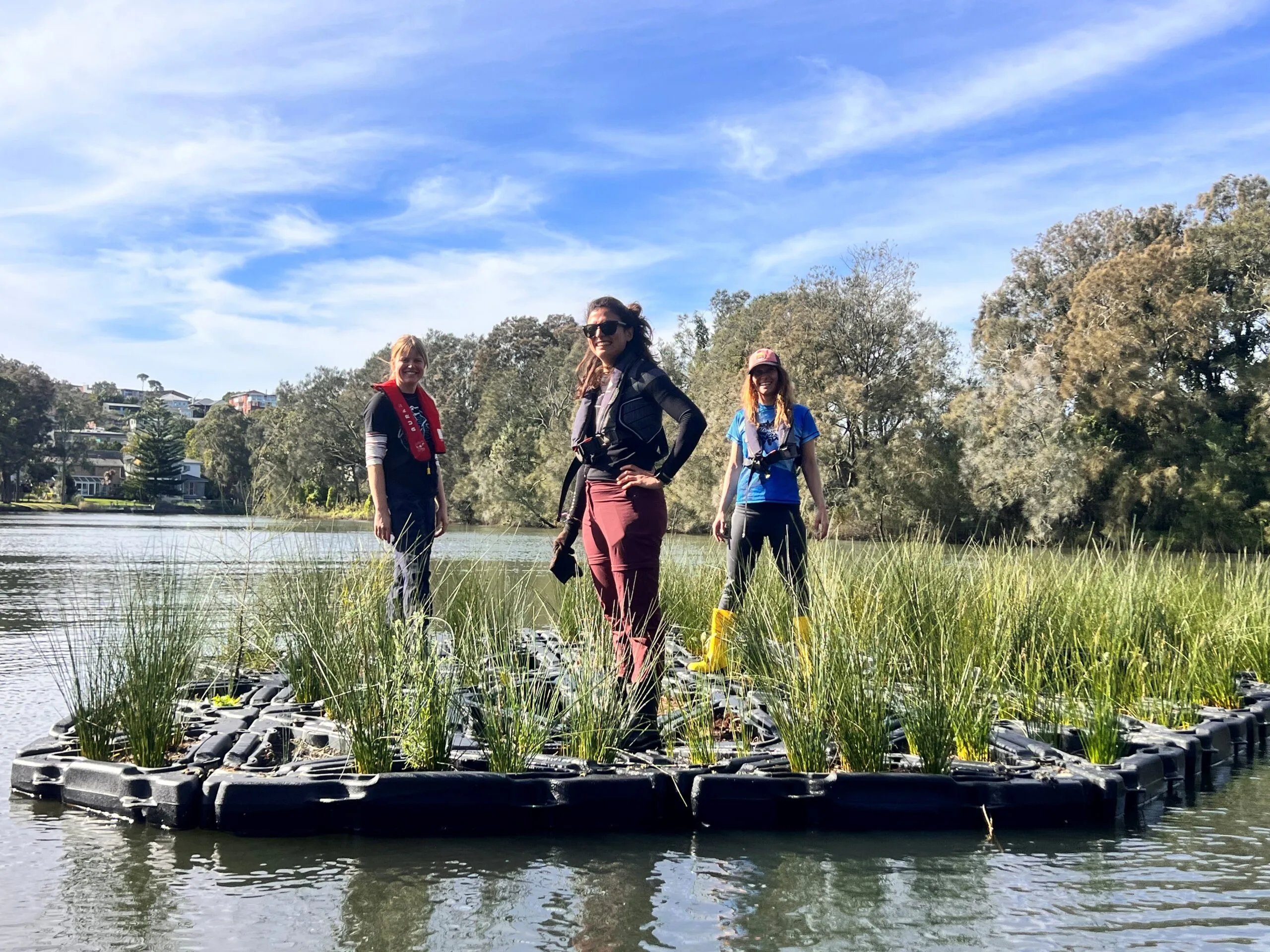
Another key focus of Project Halo is its world-first Mangrove Integrated Coastal Infrastructure (MICI)—floating pontoons that are designed to integrate the many benefits of mangroves into maritime infrastructure. With a background in mechanical engineering, Muzammil Ali is examining the ecological performance of the mangroves grown on these pontoons. His approach aims to develop floating systems that can support mangrove growth in areas where traditional restoration methods are limited by high wave energy and sea-level rise.
Supporting Pacific resilience through global collaboration
Six of the Project Halo PhD candidates based at UNSW: Sarah Wells, Giulia Fiantanese, Janani Priyanka, Emma Handley, Joshua Wilkinson, Dana Lanceman, Nikheel Sharma and Deepitika Chand; are also exploring diverse aspects of mangroves and Nature-based Solutions, covering ecology, ecohydraulics, engineering, greenhouse gas absorption, ecosystem evaluation, societal impact governance and financial mechanisms.
Together, the USP and UNSW cohorts are combining scientific expertise, engineering innovation and Pacific knowledge to develop approaches that are both globally informed and locally relevant.
Joshua Wilkinson says, “Mangroves can support community resilience in such diverse ways, so understanding what that resilience looks like for the community on a day-to-day scale is critical to the longevity of a restored ecosystem.”
Beyond their individual, overlapping research projects, the PhD candidates are building lasting relationships with each other. They’re creating a network of emerging mangrove experts who can share knowledge, collaborate on future challenges and support climate resilience efforts across Oceania and beyond for years to come.
Sarah Wells says, “The most rewarding part of Project Halo for me is working with a team who are all passionate about advancing our understanding of mangrove ecosystems.”
“The researchers in Fiji and Australia bring such diverse scientific expertise and perspectives, and being able to combine this knowledge to gain new insight into these ecosystems has been a privilege.”
Extending beyond Project Halo
As Project Halo continues to grow and implement on-ground research and restoration activities, the PhD candidates will continue to expand their breadth and depth of knowledge on mangroves and nature-based solutions more broadly, and more PhD students may even join the team.
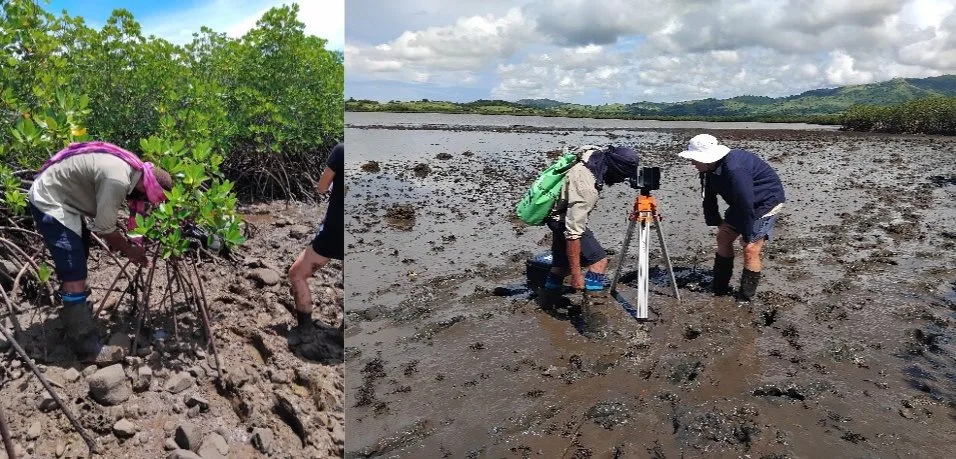
Through academic research and on-ground experiences, this network of knowledgeable and determined PhD candidates are becoming equipped with a special set of skills and attributes that they will draw on throughout their careers. Not only will they be in a position to lead or contribute to future restoration efforts in Fiji and the wider Pacific, but as those prepared to tackle the serious sustainability challenges faced by current and future generations, they hope to inspire others to follow in their footsteps.
For Principal Philanthropic Funding Partner Swire Shipping, this investment in future leaders is invaluable.
Head of Sustainability Lydia Pavlova says, “For Swire Shipping, backing Project Halo is not just about supporting vital mangrove research and rejuvenation work in Fiji, but also about investing in the next generation of Pacific researchers and practitioners who will carry this work forward.”
“By supporting the development of local expertise, scientific capability and collaboration networks, we are heartened to be part of a meaningful project that will help build the leadership and capability needed to protect ecosystems, strengthen community resilience and create lasting impact for Fiji and the wider Pacific.”