
As part of my PhD journey with Project HALO, I had the opportunity to travel from Fiji to Sydney to spend two weeks at the UNSW Water Research Laboratory (WRL). The visit was an exciting opportunity to gain hands-on experience with experimental facilities, learn new techniques, connect with researchers, and see how other Project HALO scholars are progressing with their work.
I departed from Nadi International Airport on 6 July and returned to Fiji on 18 July. Fortunately, I was able to find a rental house on Clontarf Street for the two-week stay. It was conveniently located just one bus ride away from the UNSW Water Research Laboratory on King Street, which made travelling to the laboratory each day relatively straightforward.
Getting Started at the Water Research Laboratory
On my second day at WRL, Dr Dana took me through the laboratory induction course and a comprehensive tour of the facilities. This was an important first step in becoming familiar with the laboratory environment, safety procedures, and the different experimental facilities available at WRL.
At the time of my visit, Dr Dana was conducting experiments on Biomatrix wetlands in the 3 m wave flume. I was fortunate to join her during the experiments and observe the testing process first-hand.
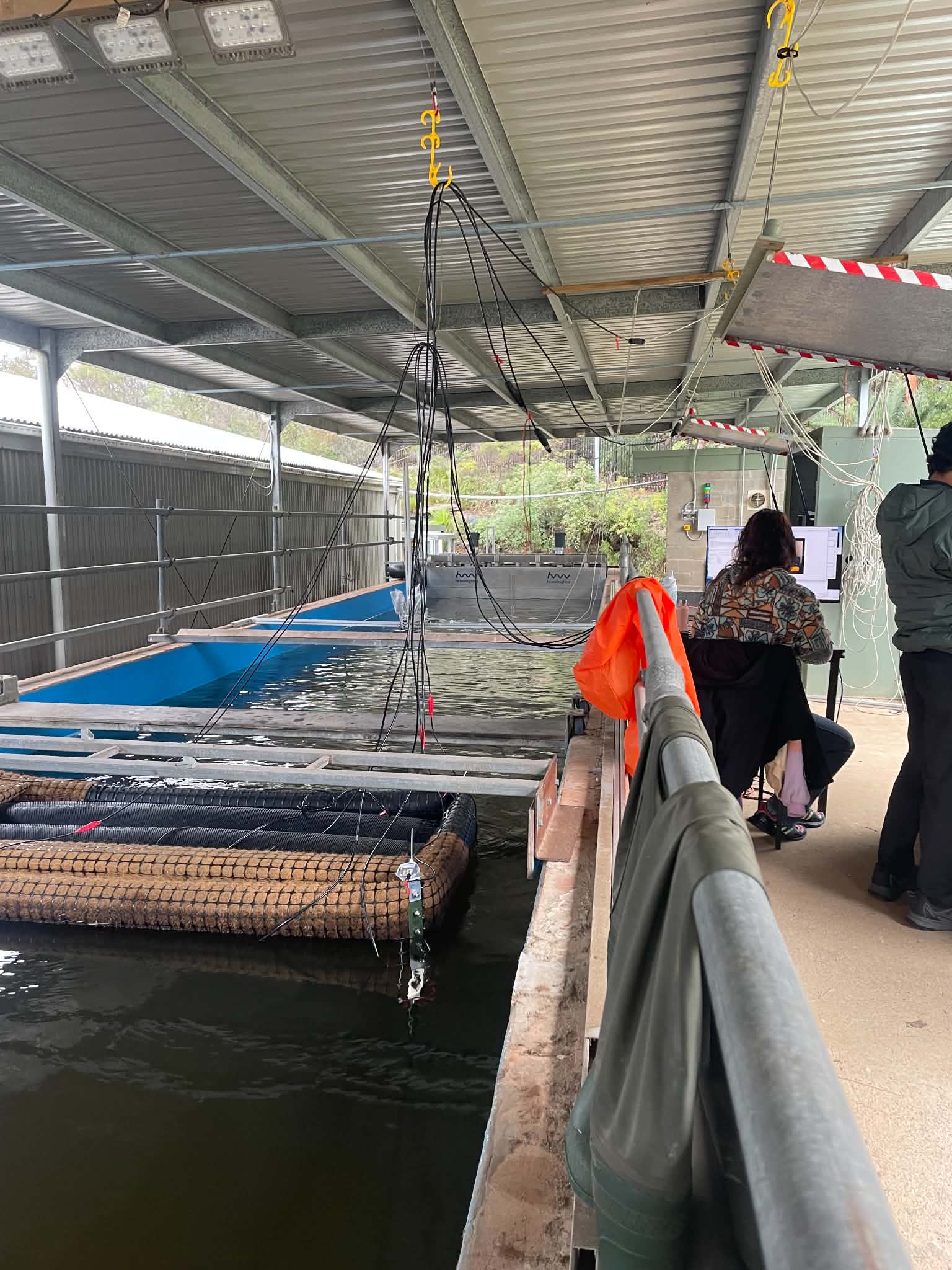
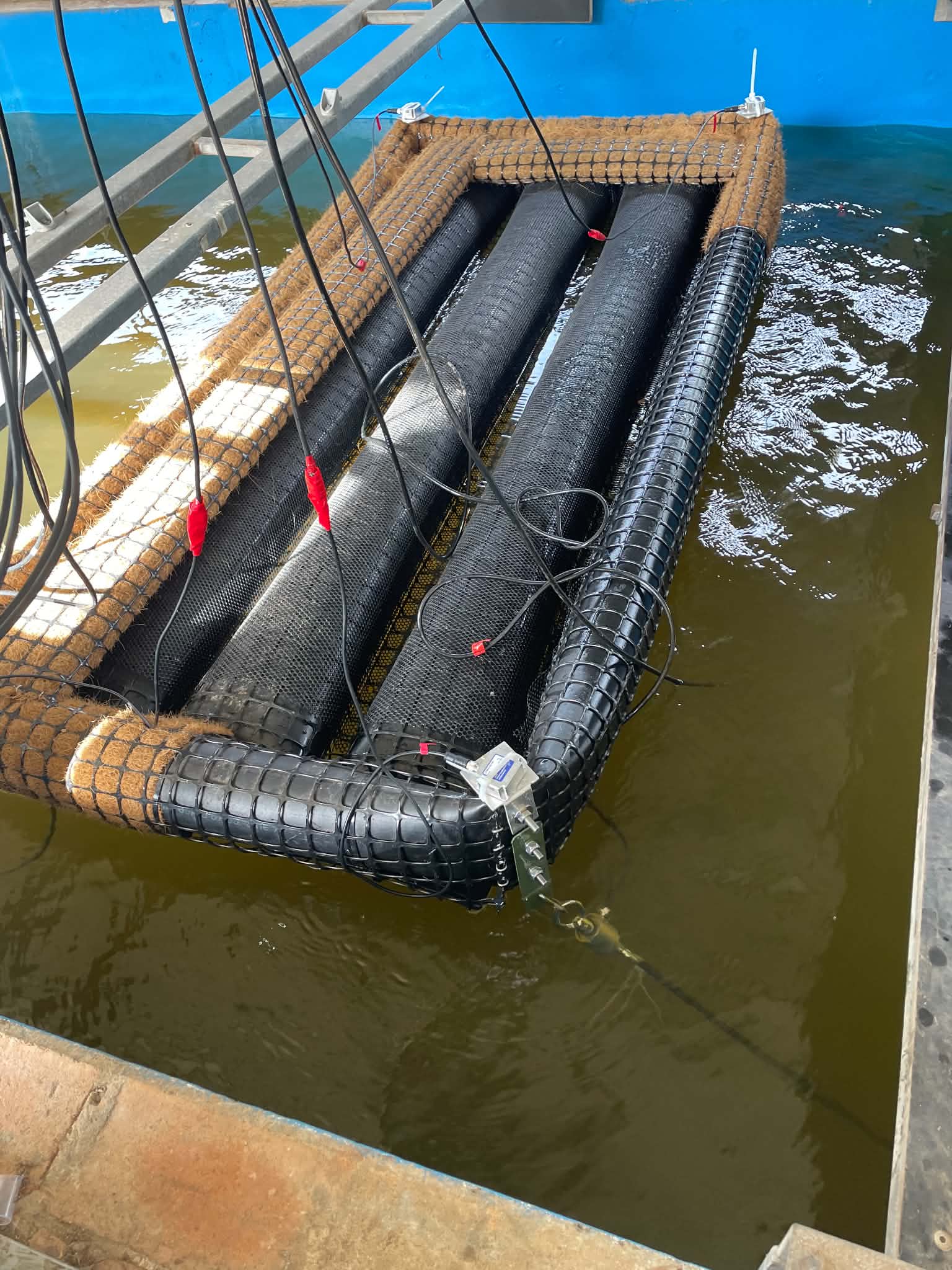
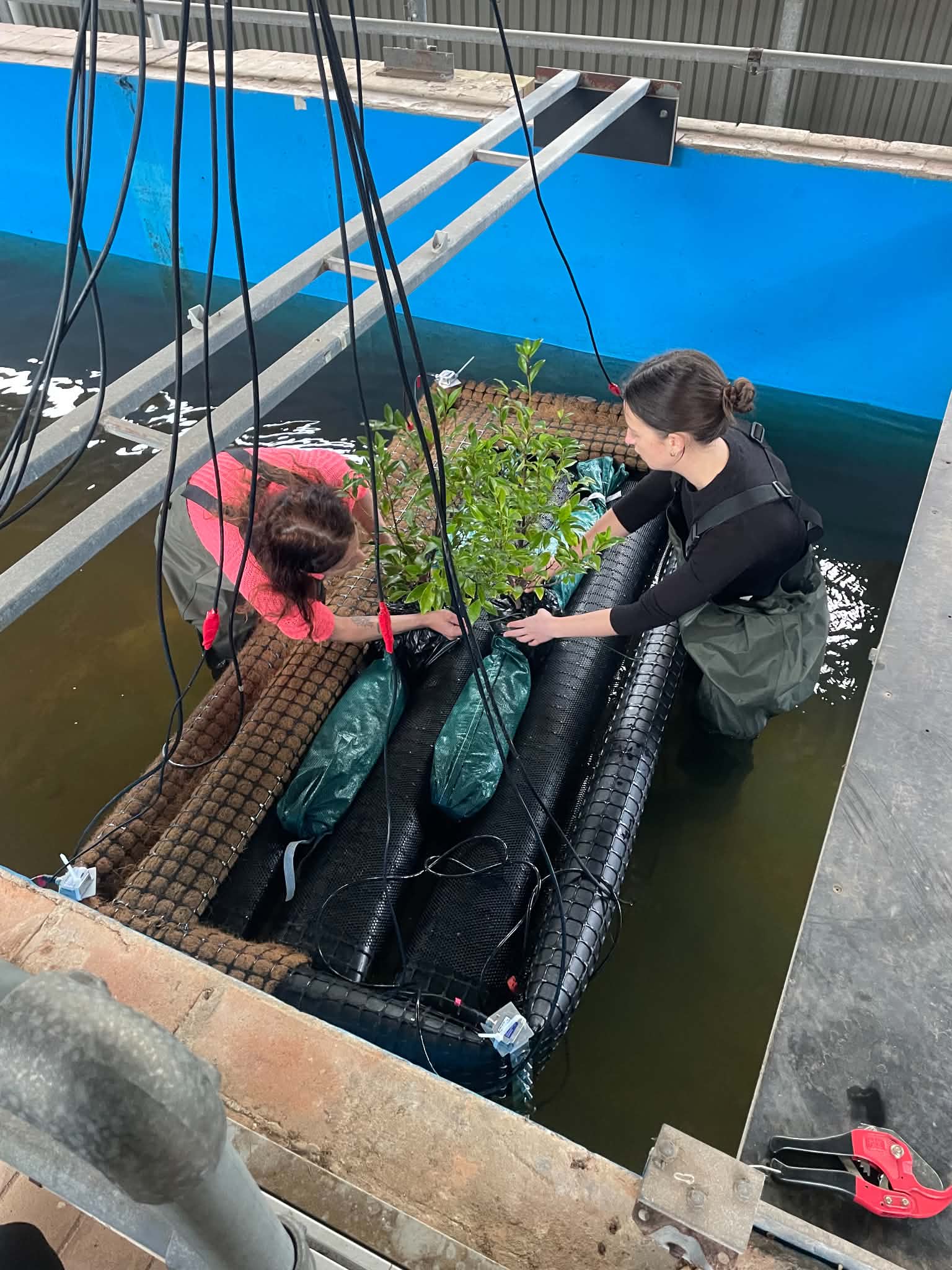
This provided me with an opportunity to see how a large-scale experimental setup is prepared and operated, and how measurements are collected to understand the behaviour of a floating wetland system under different wave conditions.
Learning to Operate the Wave Flume
Over the following days, Dana introduced me to many of the practical aspects of operating the wave flume and collecting experimental data.
One of the first things I learnt was to calibrate the wave probes and ensure that they were functioning correctly before an experiment. I was also taught how to operate the wave flume, including the procedures for filling and emptying the flume, homing the wave paddles, and identifying the locations of the emergency stop buttons.
I was then introduced to the data acquisition system (DAQ) and learnt how to start recording experiments, save the recorded data, and check whether the data being collected was reliable and correct. Understanding how to identify whether the probes were functioning properly was particularly valuable, as accurate measurements are fundamental to the experimental work.
I also gained hands-on knowledge of the wave generation system, including how to change wave-generation parameters such as wave amplitude and frequency. Another useful skill I learnt was how to generate the corresponding wave time series, allowing the desired wave conditions to be produced for an experiment.
These were practical skills that would be difficult to fully appreciate from reading manuals or research papers alone. Being able to work alongside someone experienced in the laboratory environment gave me a much clearer understanding of the entire experimental process.
Understanding Wetland Movement and Mooring Forces
Another particularly interesting aspect of the experiments was observing how the movement of the floating wetland was measured.
Inertial Measurement Units (IMUs) were mounted at the four corners of the wetland. These instruments recorded the movement of the wetland in all three axes, capturing both translation and rotation, as well as the corresponding velocities and accelerations.
At the same time, the forces in the mooring lines were measured using load cells connected along the mooring system. Seeing these measurements being collected simultaneously provided a valuable understanding of how the motion of the wetland and the forces acting on its mooring system can be studied together.
For my own research into floating mangrove restoration systems, this was particularly relevant. Understanding the relationship between wave conditions, pontoon motion, plant movement and mooring forces is important when considering the stability and performance of floating ecological structures.
From an Empty Wetland to Plants in the Flume
During the first few days of the experiments, the biomatrix wetland was tested without plants. This allowed the team to first observe and record the behaviour of the floating structure itself.
After two to three days, we introduced a few plants onto the wetland. The objective was to observe how the plants behaved in response to the motion of the pontoon under wave conditions.
To capture their movement, we installed a GoPro camera to record the plants during the experiments. This provided another layer of information that could be used to understand how vegetation responds to the movement of a floating platform.
For me, this was one of the most interesting parts of the visit because it brought together the engineering and ecological sides of floating wetland systems. The experiments demonstrated how seemingly small details, such as the movement of individual plants, can be important when trying to understand the behaviour of an entire floating ecosystem.
From the Laboratory to the Lagoon
On my last Friday in Sydney, I had the opportunity to see floating wetland systems outside the laboratory environment. I joined Emma Handley for a visit to Manly Bay Lagoon, where we went to have a look at the Atlan and Biomatrix wetland floating mangrove pontoons.
The visit was particularly valuable because it provided a chance to see the systems in their actual operating environment and to appreciate some of the practical considerations involved in managing floating structures in the field.
The pontoons were scheduled to be relocated to another location within the lagoon. We were joined by members of the Northern Beaches Council, who brought their punt to assist with the relocation operation.
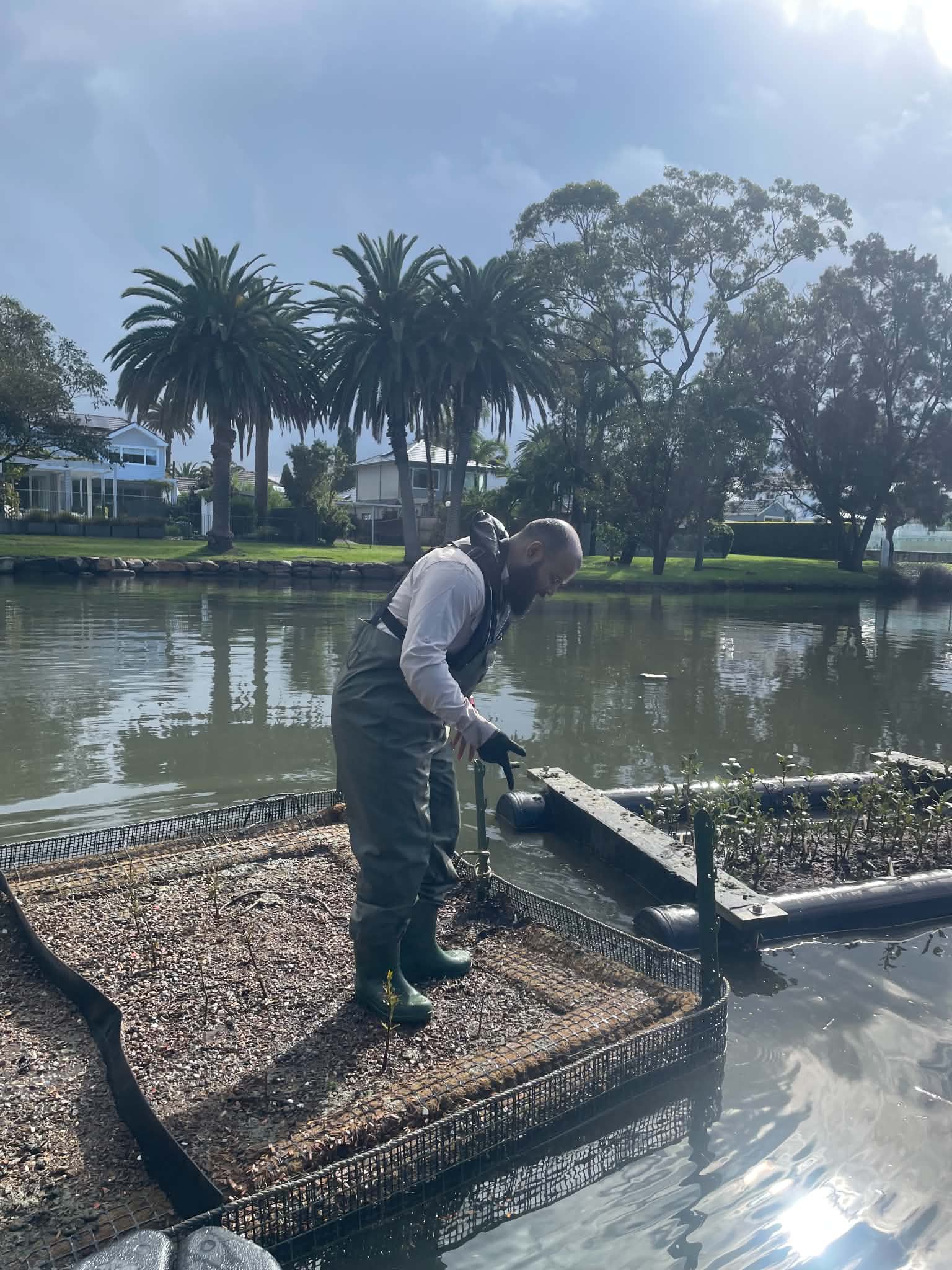
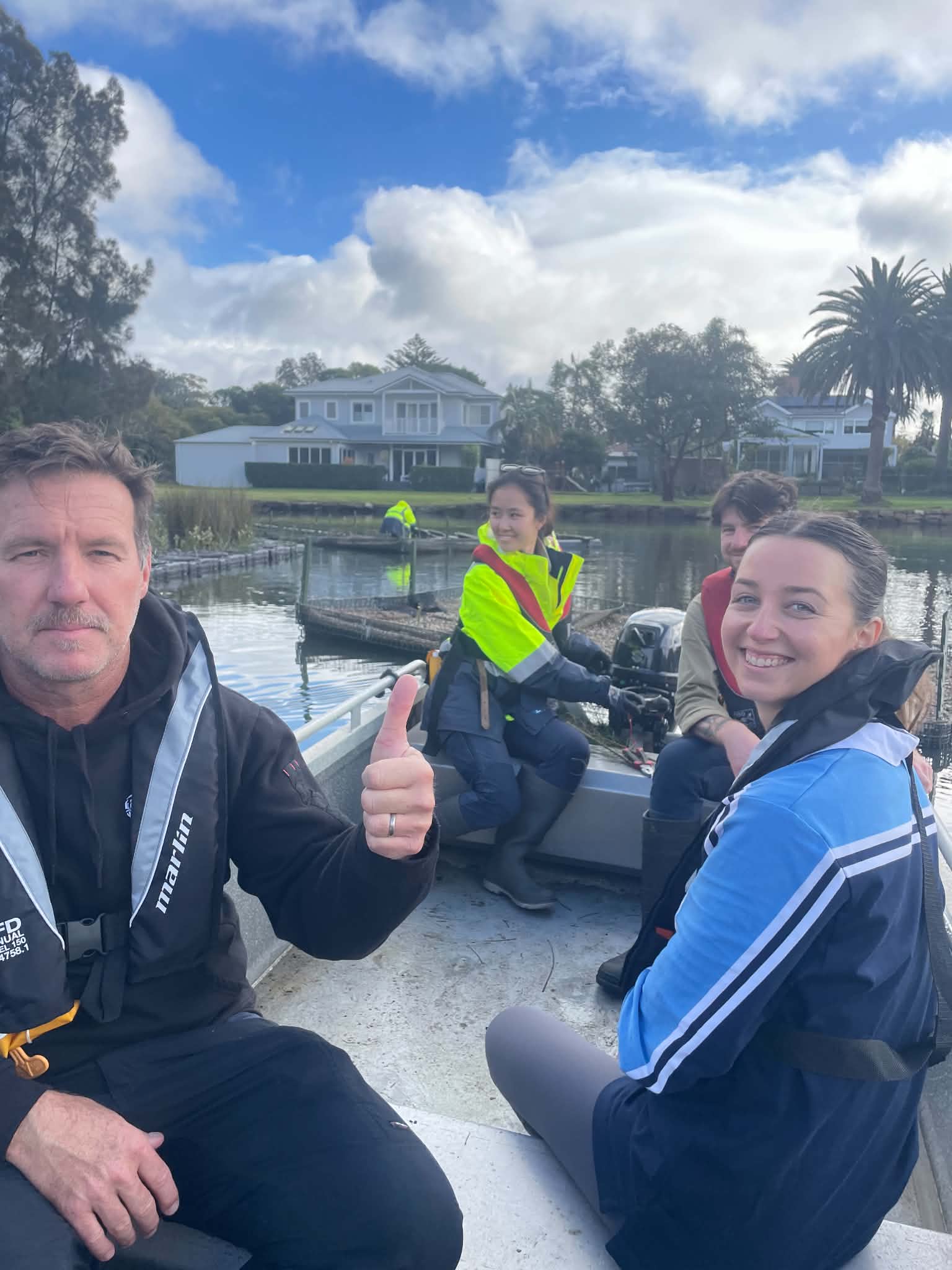
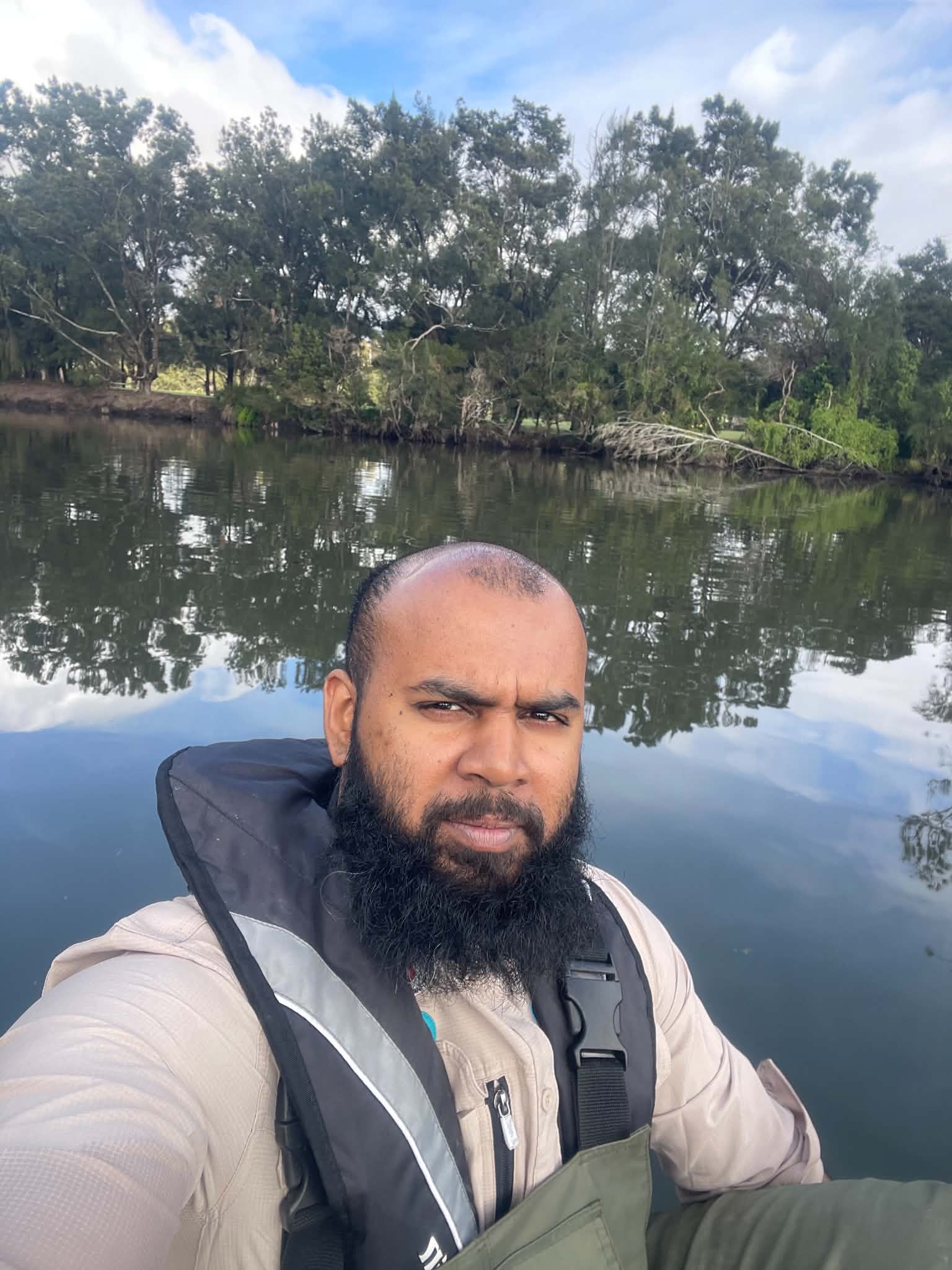
Unfortunately, the weather conditions were far from ideal. It was raining, windy and very cold, making the work very challenging. Despite the conditions, we managed to winch out the anchors for the biomatrix wetland pontoon. However, the actual relocation of the pontoon had to be postponed to another day due to the unfavourable weather and time constraints.
Although we were unable to complete the relocation, the experience was extremely useful. It highlighted an important aspect of working with floating infrastructure that cannot always be appreciated through laboratory testing—the influence of weather, site conditions, access, equipment and practical logistics on field operations.
Seeing the floating pontoons in the lagoon and then comparing them with the systems I had been observing in the wave flume gave me a broader perspective of the journey from experimental research to real-world application.
Learning Beyond My Own Research
Although the main purpose of my visit was research and training, spending two weeks in Sydney also gave me an opportunity to experience life outside the laboratory.
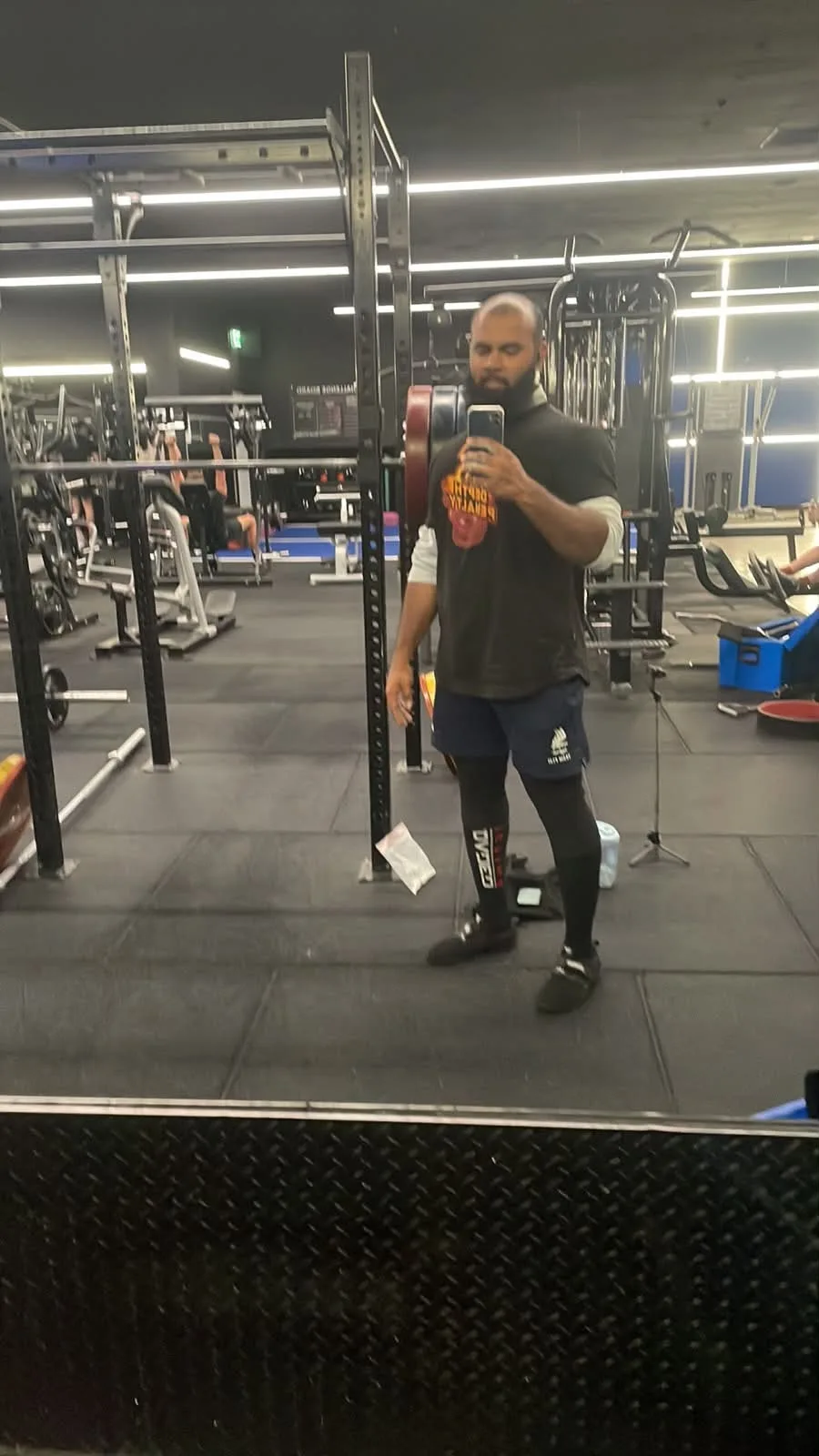
While in Sydney, I joined Plus Fitness Balgowlah, allowing me to continue my powerlifting training sessions during the trip. Maintaining a familiar routine outside research helped make the two-week stay enjoyable and balanced.
I was also able to attend Juma prayers at the Dee Why Mosque on both Fridays during my stay. I was pleasantly surprised to find that halal food was also readily available, including halal meat at Green Farm Products in Dee Why. These small things made settling into a new environment much easier.
Motivation from the Project Halo Community
Perhaps one of the most enjoyable aspects of my time at WRL was seeing other Project Halo scholars working on their respective research projects.
Being surrounded by other scholars who are working towards their own research goals was a great source of motivation. It was encouraging to see the different areas of research being pursued and to experience the collaborative research environment at WRL.
The visit also reminded me that research is not an individual journey. Opportunities to learn from supervisors, researchers, fellow scholars and technical staff can have a significant influence on how we approach our own work.
Taking the Experience Forward
My two weeks in Sydney were therefore much more than a laboratory visit. I gained practical experience in wave flume operation, wave probe calibration, data acquisition, wave generation, motion measurement and force monitoring, while also gaining a better appreciation of how experimental research is planned and conducted.
Just as importantly, visiting Manly Bay Lagoon gave me the opportunity to see floating wetland systems in the field and appreciate the practical challenges associated with operating and relocating them in real-world conditions.
Travelling from Fiji to Sydney, stepping into a new research environment, learning alongside experienced researchers, observing field operations, and seeing fellow Project Halo scholars progressing with their work made the visit a particularly memorable part of my PhD journey.
I returned to Fiji on 18 July with new skills, new ideas and, perhaps most importantly, renewed motivation to continue developing my research and contribute to innovative nature-based solutions for Pacific communities.
The experience reinforced for me that the most valuable research often happens at the intersection of science, engineering, nature and people. Project HALO provides an important platform for creating these connections, and I look forward to applying what I have learnt as my research continues.